Every day 500 people leave our labor market! In light of OECD and Social Insurance Institution data - the rate of inactivity after the age of 50 in Poland is among the highest in the EU. 800,000 people of working age give up their labor force to perform caregiving duties.
Social activity - an important part of therapy

Published Dec. 7, 2023 12:54
In 2022, disability expenditures amounted to 46 billion zlotys, increasing by more than 1.6 billion zlotys compared to 2021.
In the face of these disturbing trends, the urgent challenge of our economy is to activate those who are indispensable to us, and for whom work could be a boon. Seniors, patients and their caregivers are people for whom the possibility of work, in conditions and dimensions adapted to their situation, would restore a sense of meaning, belonging, dignity. It is also difficult to overestimate the earning potential for a person in old age or health crisis, keeping in mind that the impoverishment caused by this crisis is experienced not only by the patient, but by his or her entire family.
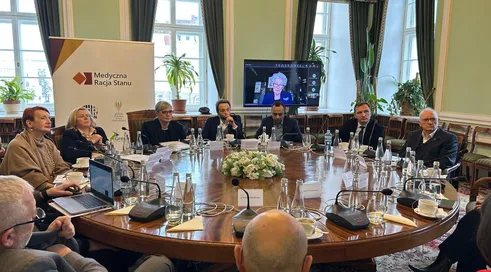
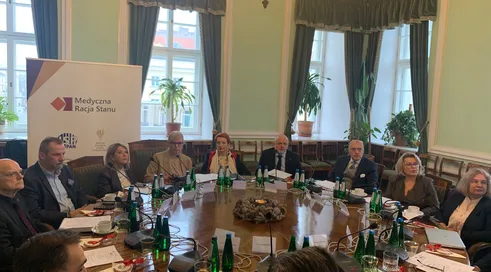
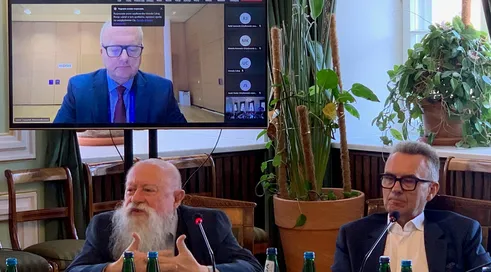
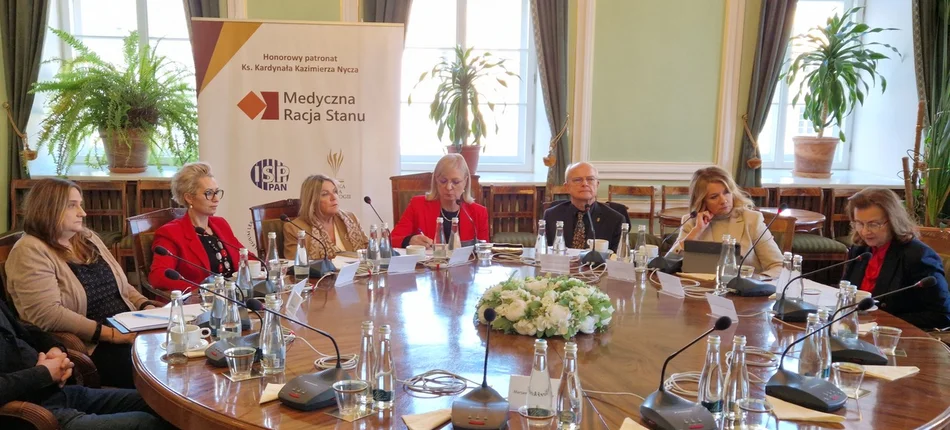
The reasons and consequences of the inactivity of such a large number of our citizens, for themselves and the country's economic situation, were discussed on December 5 during the Medical Rationale of State debate.
- The demographic context requires immediate intervention. All the cited processes will accelerate in the coming years due to the decreasing number of people feeding the labor market, creating GDP. Also of concern is the health condition of young Poles, who, when entering the labor market, will already be weaker than their grandparents' parents' generation at the start. And yet - there is no healthy economy without a healthy society, and there will be no health capital without investment in health. That's why it is so important to shape attitudes that serve this purpose from an early age," appealed Dr. Malgorzata Galazka-Sobotka, director of the Institute of Healthcare Management at Lazarski University, vice chairwoman of the NFZ Council.
Prof. Artur Mamcarz, head of the Third Department of Internal Medicine and Cardiology at WUM, spoke about the importance of lifestyle medicine and the need to invest in education, raising awareness of how to act to minimize the risk of disease and stay fit for as long as possible, reminding that restorative medicine allows increasingly effective interventions in serious health crises caused by cardiovascular disease. Unfortunately, systemically - we are much worse at being attentive to the needs of the patient leaving the hospital.
- Emotional disorders and dysfunctions, are a common barrier in a person after a heart attack to returning to a normal, active life. It used to be that a patient remained under our direct care for up to 2 weeks. Today, he leaves the hospital after 3 days, not always aware of what happened and why. Professional, systematic and multidimensional rehabilitation is essential for his safe return to active daily life.
Prof. Gertruda Uścińska, president of the Social Insurance Institution, and Prof. Adam Maciejczyk, chairman of the AOTMiT Transparency Council and director of the Lower Silesian Oncology Center, recalled the conclusions of a report prepared jointly by the Polish Society of Oncology and experts from the Warsaw School of Economics, saying that indirect costs in civilization diseases are a multiple of direct costs.
The sum of investment in health management, understood as respect for the value it represents, supported by access to modern diagnostics, therapy and rehabilitation after a health crisis, is the only way to prevent suffering and impoverishment of patients and their loved ones, while controlling state spending.
Prof. Gertruda Uścińska also drew attention to the fact that the burden of the cost of sickness absenteeism of their employees on employers is significant and growing.
This is further proof that without a healthy society, there can be no healthy economy.
- Work and a fulfilled family life co-determine our physical, mental and emotional health, enhancing self-esteem and opportunities for self-realization. In illness, social activity even forms part of therapy, as an opportunity to build a sense of normalcy and agency. On the other hand - without health it is difficult to realize any of these roles," said attorney Piotr Mierzejewski, co-chairman of the Health Expert Committee of the Ombudsman.
An exemplification of the validity of this position is the plight of patients suffering from inflammatory bowel disease (IBD), cited by Prof. Grażyna Rydzewska, vice president of the Polish Society of Gastroenterology. We are talking about Crohn's disease and ulcerative colitis (UC). In both cases, we are dealing with young people, aspiring to a fully active life, who are hindered by acute abdominal pain, diarrhea that lasts for weeks, and exhausting diarrhea. Without proper medical intervention, they are at risk of having a section or the entire intestine cut out. It's not hard to imagine what - the disease itself and its worst-case scenario - affects the realization of plans and dreams from before the diagnosis faced by a 20-year-old.
- Thanks to significant improvements in access to modern therapies, the length of sick leave and the emotional condition of IBD patients has shortened, and they can return to normalcy. However, we need to catch up with the world faster, because we have patients who have already exhausted the available forms of therapy. Particular patients with IBD and perianal fistulas are deprived of access to the latest and most effective ones," recalled Prof. Rydzewska, citing the possibility of administering a drug - darvadstrocel - during surgery, which promotes wound healing and restoration of healthy tissue.
According to Dr. Anna Pietrzak of CMKP's 2nd Gastroenterology Clinic at Warsaw's Bielański Hospital, upadacitinib, a small-molecule drug from the Janus kinase inhibitor (JAK) group, is highly anticipated by doctors and patients in the drug program. Its advantage is that it acts quickly and much more effectively than the other drugs of the cited group, shortening the healing time of the intestinal mucosa. Its additional advantage is the oral form of administration, greatly facilitating the patient's vital activity.
- We should have a full range of therapies at our disposal so that we can work with the patient to choose the best option for them. Let's remember that we are talking about young people starting families, studying or starting professional careers, who want to manage their illness without sick leave. Today, the progress of medicine makes it possible not only to treat effectively, but also to be effective in one's life," Prof. Rydzewska added, also calling for easing the, very restrictive, criteria for including patients in drug programs.
Prof. Jolanta Sykut-Cegielska, president of the Polish Society of Inborn Malformations of Metabolism, spoke about the phenomenon and the benefit of home treatment for patients with Gaucher or Fabry disease.
- Currently, enzyme replacement therapies for such patients require hospital administration every two weeks. This situation disorganizes their family and work lives. Frequent absence is frowned upon by employers. Home therapy would allow them to finish their studies, be a more effective employee and help them, to a greater extent, accept their illness. Such a solution is also a way to relieve the burden on hospitals and shorten queues.
This position was supported by Professor Zbigniew Zuber, chairman of the Expert Council on Rare Diseases of the Medical Council of State, noting the plight of some patients with congenital angioedema (HAE) - a rare genetic disease characterized by recurrent painful subcutaneous or submucosal edema, which can be life-threatening when it affects the laryngeal, facial, abdominal or genital areas.
- Prophylaxis of edema is a guarantee of patients' safety and activity. The drug program, which has been in existence for two years, gives access to this effective prophylaxis with lanadelumab but needs to be expanded to include more life-threatening locations - the face and genitals. We should add that patients enrolled in the program are virtually asymptomatic, which allows them to protect themselves from pain and return to normal functioning without feeling threatened.
Another disease that threatens life and ruins patient activity is obesity. Prof. Mariusz Wyleżoł, president-elect of the Polish Society for the Treatment of Obesity, talked about the drama of his patients. Overweight and obesity, paving the way for 200 other life-threatening diseases, is becoming a serious medical, social and economic challenge. Reducing life expectancy, hindering interpersonal relationships, increasing health care costs and lowering worker productivity, obesity disease consequently reduces GDP, which directly affects the economic health of society as a whole.
- The program of the KOS-BMI 30 PLUS pilot project includes comprehensive specialized care for patients over the age of 18 with obesity, with a body mass index (BMI) of 30 plus and at least one of the following complications: pre-diabetes, type 2 diabetes, hypertension, dyslipidemia, metabolic syndrome. We are talking about a program that is an opportunity for patients to receive causal treatment and a change of fortune, for society to save money in the health care system, and for the economy to be active and productive for this population.
To what extent access to the most effective methods of diagnosis and therapy affects the labor market was pointed out by Prof. Konrad Rejdak, president of the Polish Neurological Society, recalling that today the number of people with a disability diagnosis of multiple sclerosis (MS) has decreased by 30%.
- The accompanying symptoms of an untreated or suboptimally treated disease: pain, spasticity or fatigue - are disappearing thanks to well-constructed drug programs. These have not only become a boon to those young people who live among us with often almost imperceptible symptoms of a disease whose diagnosis until recently was tantamount to a ruling of disability and pension. Our patients want to work, travel, dance and start families. The great thing is that, treated well - they can do all these things, and we all benefit.
Poland has an alarmingly low rate of activity among people with disabilities. Among the economically inactive group, 1.2 million are sick or disabled. The progress of medicine, our empathy, solidarity with them, is a chance to change the bad statistics for the sake of a satisfying, full life for people in health crisis and for us - the healthy.
Prof. Gertruda Uścińska declared her readiness to prepare a report assessing the measurable benefits to the economy of surrounding patients with optimal medical care at the earliest possible stage; with access to the most effective methods of prevention, diagnosis, therapy and rehabilitation.
Source: press mat.
Topics
Medyczna Racja Stanu