XII Melanoma Awareness Week

Published May 17, 2023 09:54
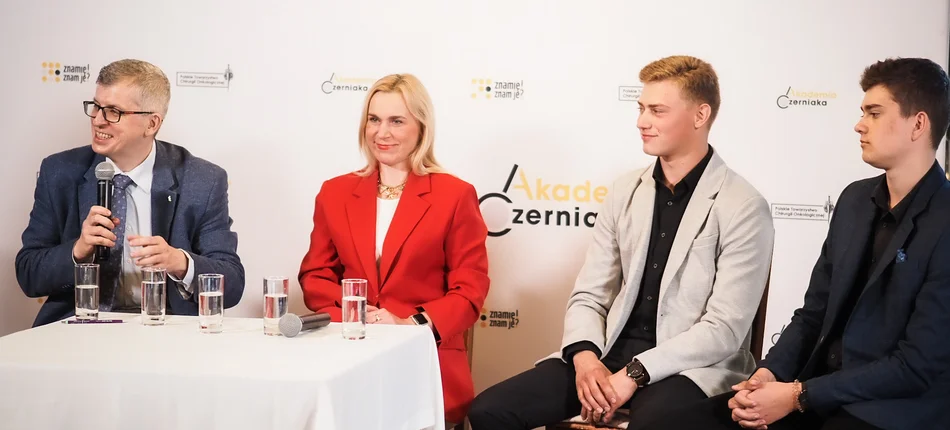
What do crop care and skin care have in common? The analogy is obvious - for crops to be healthy and abundant, they need proper care, exactly like our skin. This is confirmed by real farmers and agroinfluencers - more widely known as "Agroinfluencers", Ambassadors of this year's 12th edition of Melanoma Awareness Week. At the same time, they encourage people to follow the principles of prevention during UV exposure. The educational campaign under the slogan "Your skin - an important field to protect," aimed primarily at the agricultural community, is organized by the Melanoma Academy, the scientific section of the Polish Society for Oncological Surgery.
It's better to protect and prevent, because too late a reaction, can make the crop unsalvageable. The consequence may be only, or as much as, not much of a bountiful harvest. And what if we relate this to our skin? In that case, failure to protect against harmful UV rays can result in the loss of not only health, but even life. That's why during this year's 12th Melanoma Awareness Week, held under the slogan "Your skin - an important field to protect!", the Melanoma Academy is drawing attention to the need for prevention, especially among farmers - people who undergo frequent exposure to the sun's rays during their work.
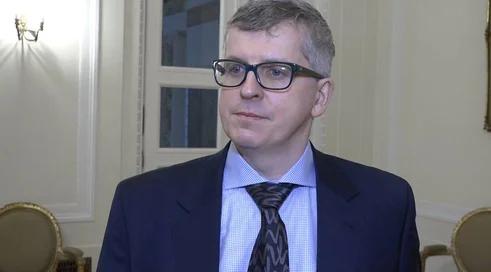
- From my years of experience working with patients, I know the great importance of education about the dangers of sun exposure and its effects on health. Often, however, concern for skin health is neglected, and the reason is a lack of awareness about the consequences of tanning, including unintentional tanning. People don't realize that frequent exposure to the open air with unprotected skin can lead to dangerous lesions, including melanoma. That's why, together with the Melanoma Academy, we are trying to reach out to various social and professional groups to build awareness about the prevention of nevi," explainsProfessor Piotr Rutkowski, MD, Head of the Department of Tumors of Soft Tissues, Bones and Melanomas at the Maria Sklodowska-Curie National Cancer Institute - National Research Institute in Warsaw, Chairman of the Team of the Minister of Health for the National Oncology Strategy, Chairman of the Polish Oncology Society, Chairman of the Scientific Council of the Melanoma Academy. - This year's edition of Melanoma Awareness Week is aimed primarily at farmers, who, due to their work outdoors, are particularly vulnerable to the consequences of solar radiation. Of course, we are aware of the hard work they do, but we want to show that taking care of health, including skin health, does not have to be difficult and time-consuming at all. That's why we hope that our campaign will not only contribute to raising the level of knowledge in this area, but will also motivate farmers to take care of their skin as carefully as they take care of their crops.
Young farmers and agroinfluencers "Agrokuzyni" became ambassadors of the campaign. - Krzysztof and Bartholomew, who, through their participation in the official Melanoma Awareness Week spot, are making other farmers aware of melanoma protection.
- Working on the farm is my way of life. However, it requires a lot of time and sacrifice, especially in summer, when the most is happening. That's also when we're often outside, in the fields, in full sunlight. Even when we are in the cab of the tractor, the sun makes itself felt even more strongly, shining through the glass," says Krzysztof Gorzelańczyk, farmer, agroinfluencer, co-founder of the "Agrokuzyni" channel. - That's why Bartek and I got involved in the Melanoma Academy campaign. It's good that someone - farmers - noticed us and wants to help us take care of our health. Especially since it is so simple. Therefore, we are happy to join in educating others and will promote protection against melanoma ," he adds.
Should one be afraid of melanoma?
Melanoma is the most malignant of all skin cancers, but it can also develop on mucous membranes or on the surface of the eyeball. It is characterized by aggressive growth, as well as the ability to form early and numerous metastases, including to lymph nodes, lungs, brain and other areas of the body, which are difficult to treat with drugs.
Increases in the incidence of melanoma have been evident for years. Between 3,700 and 4,000 cases are still diagnosed each year in Poland. The cancer can develop at any point in life, but, according to the National Cancer Registry, most cases are recorded among adults aged 35-49 and seniors aged 60-74. Unfortunately, the lack of proper prevention and irresponsible behavior lead to a high mortality rate (from 40% to as much as 60%) in people over 70.
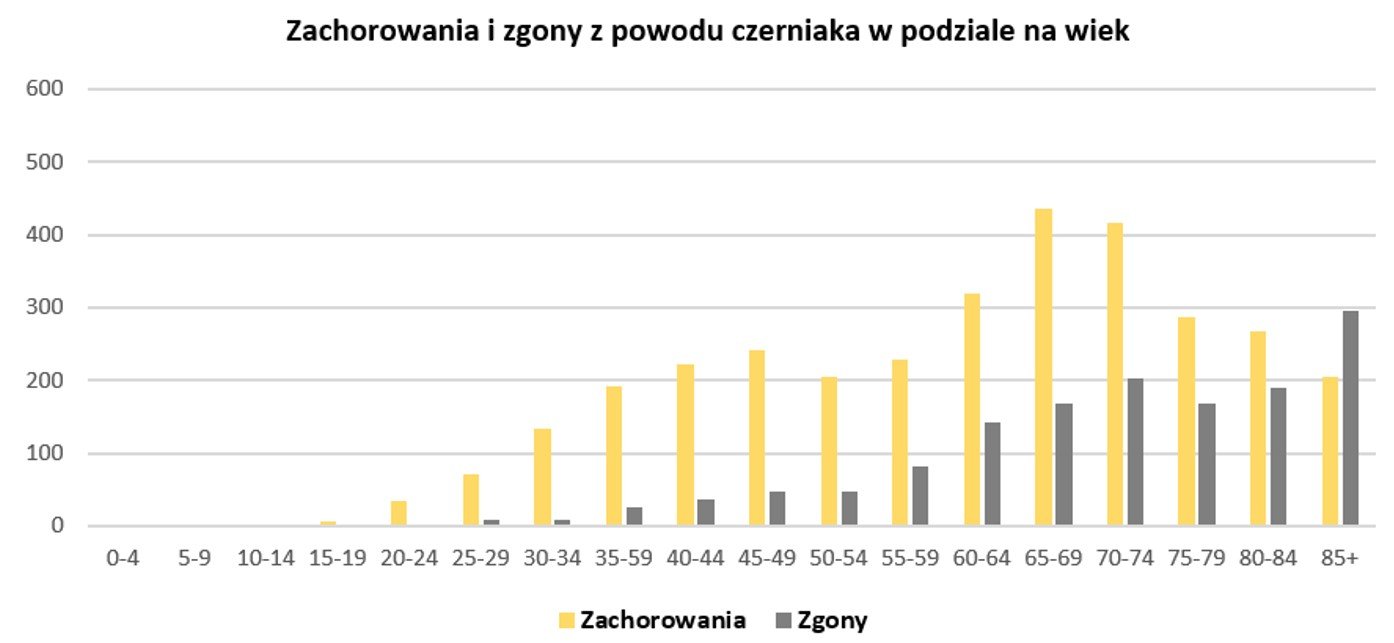
Figure 1. Melanoma incidence in Poland in 2020 by age, based on data from the National Cancer Registry.
In recent years, however, Poland has seen significant improvements in the outcomes of patients diagnosed with melanoma, particularly in terms of 5-year relative survival. A state-of-the-art drug program has also been launched, which includes immunotherapy and targeted therapy, including adjuvant therapy, with proven treatment efficacy.
Farmers and other melanoma risk groups
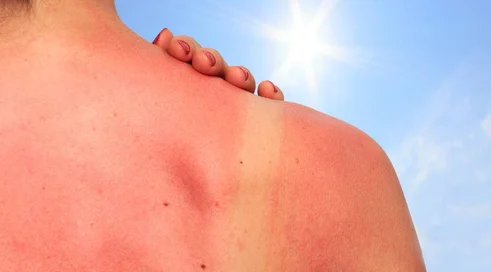
One of the main risk factors for melanoma is exposure to sunlight, especially invisible ultraviolet (UV) rays, which cause damage to the skin and increase the risk of skin cancer. This may concern professionals who, due to the nature of their work, are often in open, sunny areas, such as farmers.
The risk of contracting the disease also increases among people who have skin phototype 1 or 2, that is, fair, freckled skin that is prone to sunburn. Genetic predisposition and a family history of the disease can also play a role, albeit a small one.
Prevention for everyone
Unfortunately, there are still too many people who are unaware of the nature of the problem and do not take sufficient preventive measures that could reduce the risk of developing melanoma or enable its early diagnosis.
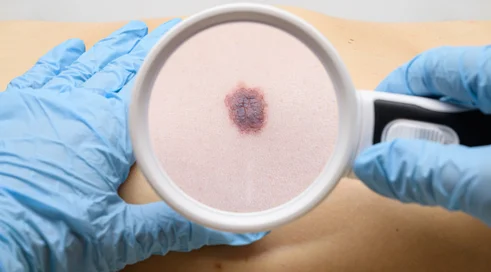
- Regular self-examination and annual examinations of nevi at a dermatologist or surgical oncologist increase the chance of early diagnosis of melanoma, and thus the implementation of effective treatment. When I say effective treatment, I mean that an almost complete cure is possible, and for as many as 97 percent of patients. To make this possible, however, it is important to know and follow the principles of both primary and secondary prevention. In particular, people who are exposed to frequent UV radiation should pay attention to the condition of their skin, regularly inspecting the changes occurring in old or newly formed nevi. In case of suspicion, a specialist should be consulted as soon as possible. - says Professor Grazyna Kaminska-Winciorek, MD, dermatologist-venereologist, head of the Skin Cancer and Melanoma Team at the Maria Sklodowska-Curie National Cancer Institute - National Research Institute, Gliwice Branch. - One of the most important tools that can help detect melanoma is the dermatoscopic examination, which is short, non-invasive and painless, which is why I all the more boldly encourage regular examinations, including for older people in whom melanomas may not develop in the classic way.
Golden rules to protect against melanoma
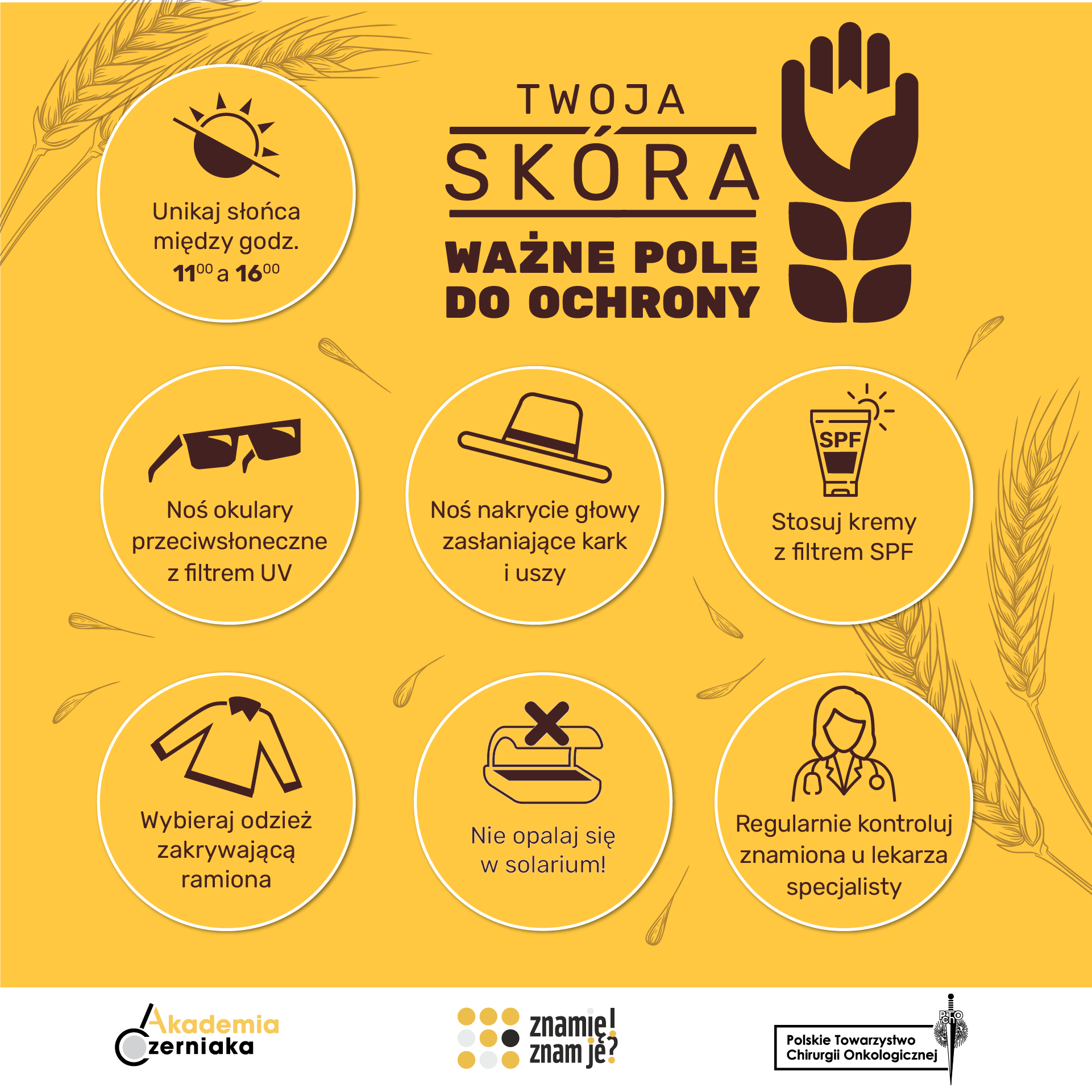
The principles of melanoma prevention are just a few undemanding recommendations. Their simplicity and ability to be implemented quickly are sure to be appreciated by farmers, as they do not require a lot of commitment and time spent running the farm. Principles worth remembering and following include, first of all:
- Using creams with a high enough UV filter, preferably SPF 50;
- Wearing sunglasses with UV filters, long-sleeved shirts and headgear;
- Avoid overexposure to the sun, especially between 11 a.m. and 4 p.m., if possible.
In addition, the following are also important:
- Absolutely avoid tanning beds;
- Annual check-up of nevi with a dermatologist or surgical oncologist, and in the meantime, regular self-observation of the skin - if there are any worrying changes or new nevi, contact a specialist immediately.
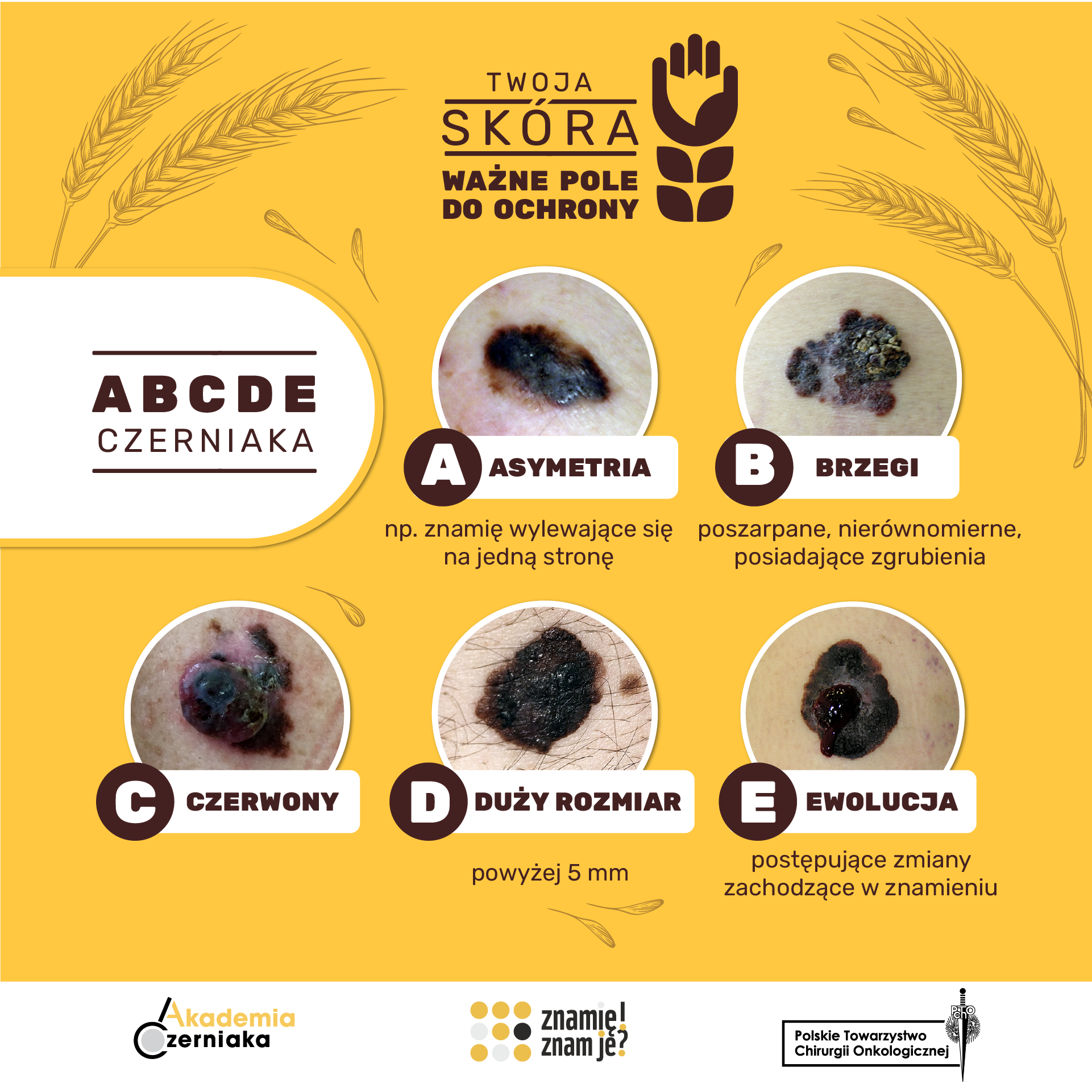
ABCDE of melanoma
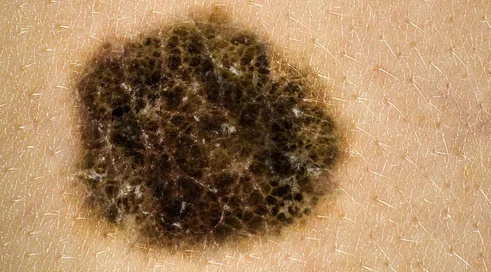
What to pay attention to during self-examination of nevi? How to differentiate melanoma from an ordinary nevus? It will be helpful to know its five characteristics. For ease of use, they are included in the so-called "Melanoma ABCDE" and specify:
- A-symmetry - a birthmark spilling over to one side;
- B-edge jagged - a nevus whose edges are not smooth, which is not round/oval;
- C-red, black, non-uniform color of the mole;
- D-large size - a nevus over 6 mm in size;
- E-volution - a nevus that has changed in a short period of time, enlarges, rises above the surface of the skin, itches, cracks, burns, around which several new nevi have formed.
It is worth emphasizing that skin prevention applies to everyone, regardless of gender, age and type of work. In any case, "Your skin - an important field to protect!".
Details of the 12th Melanoma Awareness Week can be found on the Melanoma Academy Facebook page - "I know it. Do I know them?". For more information about melanoma and the Melanoma Academy and its activities, visit the Melanoma Academy website.
infra