June 21 marks the Day of Solidarity with Migraine Sufferers. Although everyone has heard of this disease, unfortunately it is still disregarded, often misdiagnosed and incorrectly treated. The myths and stereotypes that have grown up around migraine over the years mean that patients still face a lack of understanding from those around them. Meanwhile, migraine is a serious brain disease that very significantly impairs the daily activities of sufferers! Implementation of the postulates included in the Decalogue of Needs for Polish Neurology, developed this year by the Polish Neurological Society, would significantly improve the diagnosis and treatment of migraine, and consequently the situation of patients. It would also reduce the enormous social costs associated with migraine. A 2019 report by the Polish Neurological Association shows that the costs of absenteeism and presenteeism due to migraine amount to about 8 billion a year.
Migraine: neglected, often misdiagnosed and incorrectly treated

Published June 21, 2023 08:41
Thinkstock/GettyImages
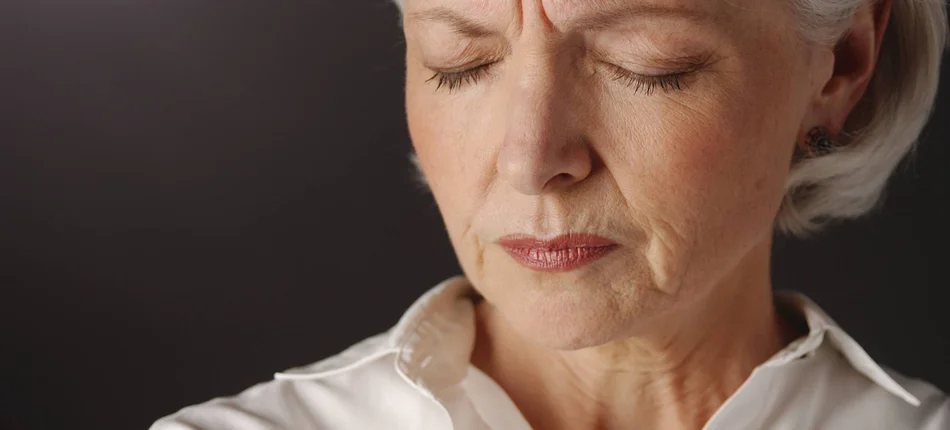
Migraine is a fairly common disease, as it affects 10-12% of the world's general population, which means that in Poland about 4 million people suffer from it. They are usually active people, as migraine affects the age group from puberty to menopause. Women are more often affected.
Migraine is characterized by severe, paroxysmal headaches and accompanying symptoms originating in the central nervous system, such as nausea, vomiting, hypersensitivity to light and noise. These are known as autonomic symptoms. In some cases (15-30%), there are also so-called auras, or focal neurological symptoms (usually various visual disturbances), which last from 5 to 60 minutes and precede the onset of headache and autonomic symptoms. Although visual aura is the most common, other forms of aura are less common, such as sensory aura (associated with sensory disturbances, such as wandering tingling), motor aura (involving, for example, temporary paralysis of various parts of the body) or aura with speech disturbances (the patient speaks gibberish and has difficulty finding the right words).
Migraine - episodic or chronic?
In addition to the division into migraine with and without aura, the division into episodic and chronic migraine is used. The latter is considered the most severe form of the disease. Chronic migraine is one of the three diseases that most impairs the daily functioning of people in the 18-60 age group! It practically excludes patients from normal social, family, work and social activities.
Whether one has episodic or chronic migraine depends on the diagnosis, which is made based on the International Classification of Headache Disorders. Generally, chronic migraine is diagnosed when a patient has a headache every day or every other day (at least 15 days per month) for at least three consecutive months. At least eight of these pains must meet the criteria for a diagnosis of migraine headaches. Episodic migraine, on the other hand, is diagnosed when typical symptoms occur less frequently than 15 days per month.
- Patients diagnosed with chronic migraine can receive prophylactic treatment in a drug program that has been in effect in Poland since July 2022 and is being implemented in 50 centers in the country. Under it, several hundred patients are already receiving reimbursable treatment with botulinum toxin or monoclonal antibodies that block the action of one of the neurotransmitters, the calcitonin gene-dependent peptide CGRP, according to global and European standards. The treatment aims to prevent migraine attacks, reduce the number of days with headaches per month, reduce the use of painkillers and improve migraineurs' quality of life. We are very pleased with the establishment of this drug program and consider it a great success for our entire community. However, some patients with chronic migraine do not meet the eligibility criteria for the drug program. There are also patients who are not diagnosed with chronic migraine, but they have episodic migraine with frequent attacks and also suffer a lot. It would be worthwhile to think about reimbursing drugs for them as well, since in commercial access these drugs are too expensive for most patients to afford," says Prof. Izabela Domitrz of the Department of Neurology at Warsaw WLS Medical University, president of the Headache Section of the Polish Neurological Society.
In order to cover more migraine patients with reimbursable treatment, it is necessary to increase funding for the diagnosis and treatment of diseases of the nervous system. This is one of the points in the Decalogue of Needs for Polish Neurology, which was developed and presented this year by the Polish Neurological Society - on the occasion of the organization's 90th anniversary.
The most important correct diagnosis
In order to treat migraine well, it is crucial to make a correct diagnosis - preferably by a neurologist. The visit during which the doctor makes the diagnosis should last 40-60 minutes. During it, the doctor examines the patient, takes a very thorough history, rules out other diseases and discusses with the patient further management, which should be individually tailored to both the diagnosis and the patient's profile.
- The choice of drug treatment must take into account the patient's preferences and intolerance and contraindications to various medications. Some drugs are contraindicated in women of childbearing age, and it should be remembered that women make up the majority of migraine patients. In them, some medications cannot and should not be included. It is also necessary to identify non-pharmacological management options and individual triggers of seizures so that the patient can avoid them. It is important that the patient knows exactly what form of migraine he has and whether he can take over-the-counter medications, for example, and if so, which ones. Of course, in the treatment of migraine, in addition to preventive treatment, ad hoc treatment is also used, although overuse of ad hoc medications can lead to a drug-induced headache, that is, a headache from overuse of medication. Ad hoc treatment involves the patient taking medications designed to alleviate the symptoms of the migraine attack they are experiencing. In this case, patients are recommended simple analgesics, non-steroidal anti-inflammatory drugs (NSAIDs) and preparations from the tryptan group, and more recently, gepant," explains Prof. Izabela Domitrz.
In order for every migraine patient to have a chance to see a neurologist, it is necessary to increase the number of neurologists in Poland. This will be fostered by establishing neurology as a priority specialty, investing in medical staff in neurology, and establishing neurology as a strategic area in the Polish health field, as the Polish Neurological Society has been advocating for years. These are other important points in the Decalogue of the needs of Polish neurology, which was created in the year of the 90th anniversary of the Polish Neurological Society.
- The indirect costs resulting from migraine are borne by society as a whole, which is why we must do everything to diagnose and treat migraine effectively, so that patients do not fall out of professional and social life, the expert concludes.
Source: PTN