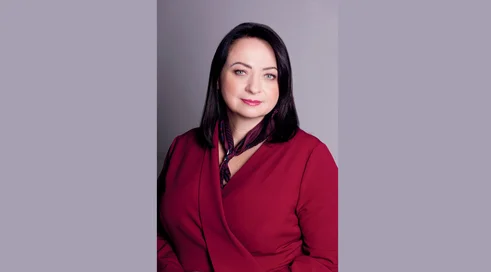
An interview with Monika Pintal-Slug, newly elected president of the National Council of Laboratory Diagnosticians.
"Health Services
I want to unite and activate diagnosticians

Published March 29, 2023 12:09
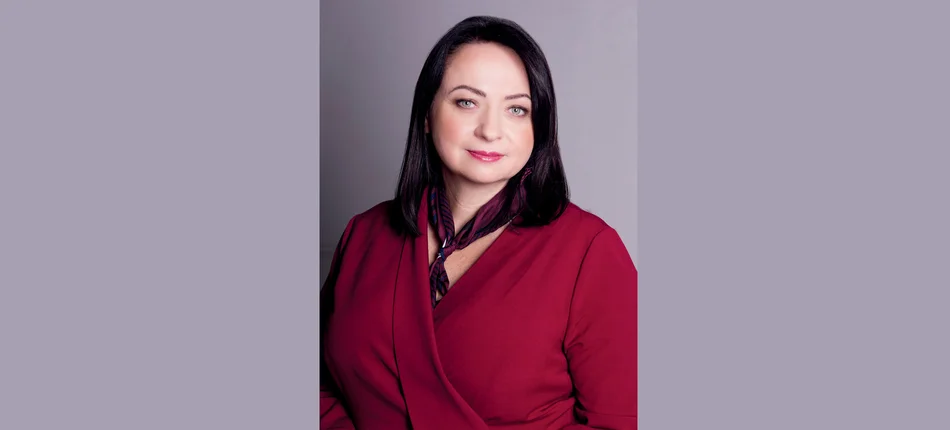
Ewa Szarkowska: Why did you decide to run for president of the KRDL?
Monika Pintal-Slug: This is a conscious decision resulting from the need to take responsibility for our professional self-government. I have been working on behalf of the community of laboratory diagnosticians for more than 20 years. I don't hide the fact that a conversation with my mentor Dr. Henryk Owczarek, the first president of the National Council of Laboratory Diagnosticians, with whom I remain in constant contact, had a significant influence on this decision. It was he who taught me to look at self-governance and the common good. I have always tried to be close to the diagnosticians, to support them, sharing my expertise and experience as a specialty manager and as an auditor for the Polish Center for Testing and Accreditation. For the past four years in the professional diagnosticians' self-government, I have served as vice-chairman of the KIDL audit committee. I was also encouraged to run for election by young diagnosticians who formed the Association of Medical Laboratory Activists. I also had the support of the trade unions, which I had helped earlier in the fight for good provisions in the Law on Laboratory Medicine. So I decided that this was the most opportune time for us to do something, to implement our ideas and take responsibility for them.
E.S.: The newly elected National Council of Diagnosticians has defined the directions of the Chamber's activities for the next four years. Do they coincide with your program, which you presented to the delegates to the convention?
M.P.¶: Strategic program decisions for the coming term have already been made by the National Congress of Laboratory Diagnosticians, and they are completely in line with my declarations. The main goal is to raise the profile of the profession of laboratory diagnostician in the health care system and public space. Strengthening the role of the diagnostician would certainly be fostered by expanding the powers of the diagnostician through the introduction of diagnostic advice by laboratory diagnostic specialists in the Law on Laboratory Medicine, which, in our opinion, would provide tremendous support for the doctor and the patient. This is one of the many solutions we are discussing today.
E.S.: What would this expansion of competence consist of?
M.P.S.: The idea is that a laboratory diagnostician, in the event of alarming results, for example, could additionally order tests without having to wait for a doctor's order. The diagnostician could provide such diagnostic advice to both the patient who has tests performed on an outpatient basis, and could also assist the doctor by participating in treatment teams that are organized at the hospital. Such a solution is an example of how we can effectively utilize the extensive knowledge of diagnosticians, gained in medical studies and postgraduate training. Of course, we are open to discussing further training and knowledge development to further support doctors and patients. I am convinced that (...)
The entire interview is available free of charge HERE.