Experts: without the introduction of modern therapeutic solutions, the problem will grow
Europe faces rising scale of allergic diseases and asthma

Published June 10, 2026 06:00
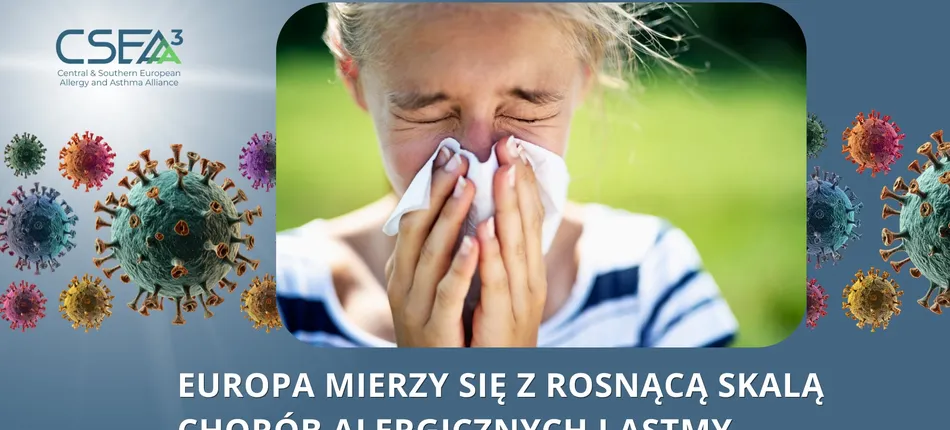
In May, Warsaw became the capital of European allergology for three days. The First International Congress of CSEA3 (Central and Southern European Allergy and Asthma Alliance) brought together leading experts, clinicians and researchers from numerous countries in Europe, including Central and Southern Europe, and the USA. The future of allergy and asthma treatment was debated, with particular emphasis on the latest therapeutic advances and the translation of research findings into more effective patient care.
- By creating a new international organization, the Central and Southern European Allergy and Asthma Alliance, we wanted to fill a gap in this region of Europe, which lacks a unified, strong voice influencing global change," says Prof. Marek Jutel, head of the Department of Clinical Immunology at the Wroclaw Medical University, director of the ALL-MED Medical Research Institute in Wroclaw, director of CSEA3 and former president of the European Academy of Allergy and Clinical Immunology.
According to Prof. Jutel, by acting together as part of larger organizations, there is a much better chance for the voice of experts to be realistically heard in the European forum. Coming together allows one to influence decisions more effectively than individual attempts to break through the positions of countries such as the UK, Spain, France or Germany.
While Poland's voice remains relatively visible, organizations from countries such as Lithuania, Estonia, Hungary, Bulgaria, Slovakia, Serbia, Croatia and North Macedonia are often too small for their positions to be fully taken into account. As a result, their voice remains on the margins of the broader European debate.
This is why cooperation and consolidation within larger structures are crucial to increasing the influence of smaller countries on European policy.
How to treat severe cases?
During the scientific sessions, specialists from various countries in the region shared their experiences in treating patients suffering from allergic diseases and asthma. A topic that often appeared in the presentations was the role of modern biological drugs. They work precisely at the level of the immune system, blocking specific inflammatory mechanisms (cytokines or antibodies), which prevents attacks, such as in severe asthma, and reduces disease symptoms.
- Severe asthma is currently one of the areas with the most research and therapeutic progress. To date, we have achieved about 30 percent clinical remission in the treatment of severe asthma. However, work is constantly underway to increase this percentage," Luis Pérez de Llano of the Department of Pneumology at Lucus Augusti University Hospital in Spain said at the congress.
In his view, significant progress has already been made, as there has been a shift from the traditional disease control approach to the more ambitious goal of clinical remission. This includes the absence of exacerbations, no need for oral corticosteroids and improvement in lung function.
- The next step would be to achieve biological remission, i.e. complete extinction of inflammation in the airways and elimination of bronchial hyperreactivity. It's a state that in practice would mean restoring the patient to full health, Pérez de Llano explained.
So why, despite the availability of modern and highly effective biologic drugs, do we still remain at about 30 percent clinical remission?
- First of all, it is important to remember that complete remission will not always be possible, as some patients experience, for example, bacterial exacerbations, in which biological therapy is not the treatment of first choice. In addition, many patients suffer from comorbidities that significantly affect the course of asthma," the doctor explained.
The difficulty of predicting a patient's response before starting biological therapy also remains a problem. - We do not currently have tests that can predict an individual's response to treatment with a high degree of precision, he added.
Admittedly, specialists point to so-called predictors of poorer response, such as obesity, anxiety, depression, long disease duration or previous use of biologic drugs. However, there is still no "ideal" biomarker to predict the best possible response in a particular patient.
According to the Spanish expert, the first key challenge therefore remains the further development of tools to accurately predict response to biologic treatment.
Rhinitis and atopic dermatitis. Two sides of the coin
Doctors dealing with patients with chronic allergic rhinitis, especially in its more severe form - with polyps - face similar problems.
- We don't have readily available biomarkers that can predict in advance which patient will need just one nasal surgery, after which their situation will significantly improve, and which will need a biologic drug because surgery will not produce the expected disease control effects, said Whitney Stevens of Northwestern University's Department of Allergy and Immunology in the US.
The situation is better for the treatment of patients with atopic dermatitis (AD). - We are very fortunate because, thanks to advances in research today, it is easier for us to understand the different phenotypes of this disease, as well as to track it with molecular biomarkers," Ester Del Duca at Italy's Tor Vergata University of Rome told the news source.
Atopic dermatitis (AD) is one of the most common inflammatory skin diseases. It is estimated to affect about 10-20 percent of children and 2-10 percent of adults in developed countries, including Europe and the United States.
In most patients, the disease has a mild course, but about 20-30 percent of patients experience a moderate to severe form, which often requires systemic treatment, including systemic or biologic therapies.
One of the causes of atopic dermatitis (AD) is a disruption in the production of a key epidermal protein, filaggrin. This leads to damage to the skin barrier, increased water loss and easier penetration of allergens, resulting in chronic inflammation.
- Biological drugs such as dupilumab significantly restore skin barrier function. Therefore, we believe that atopic dermatitis is a potentially reversible disease," the Italian expert said.
It is currently awaiting registration of a drug even more targeted at pruritus, which is one of the main and most bothersome symptoms reported by AD patients.
- Interleukin 31 (IL-31) is the "queen of pruritus" for us. Drugs targeting this pathway may be of great importance for patients in whom pruritus dominates the clinical picture. Another potent therapeutic weapon are JAK inhibitors, which have made a significant difference in the lives of many patients in practice and have achieved a high level of improvement in skin lesions, Prof. Del Duca said.
How to treat anaphylaxis?
Anaphylaxis, especially caused by food allergens, is a significant and growing health problem in Western countries, including Poland, with an observed increase in cases, especially in younger age groups.
It is estimated that the mortality rate from anaphylaxis is about 100 cases per year in Poland, which may correspond to more than 130,000 anaphylactic episodes per year.
- An objective indicator of the incidence of anaphylaxis, or at least its diagnosis, can be seen in the up to sixfold increase in the number of reports over an eight-year period (2008-2015), said Prof. Anna Nowak-Węgrzyn of New York University's Grossman Faculty of Medicine and Hassenfeld Children's Hospital.
Prompt administration of epinephrine is crucial in the treatment of anaphylaxis. Immediate intervention not only relieves symptoms, but can also inhibit further progression of the reaction by stabilizing mast cell and basophil membranes.
In recent years, there has been increasing interest in intranasal epinephrine, which was recently approved as an alternative to intramuscular autoinjectors. Preliminary results from Japanese and U.S. teams indicate its efficacy and safety, with a comparable need for a second dose to that of intramuscular injection. The intranasal form may also increase acceptance of the therapy among patients, reducing the barrier associated with injections.
There is also increasing emphasis on the prevention of severe allergic reactions. One novel approach is the use of biologic therapies that aim to prevent the onset of anaphylaxis, rather than solely treating its symptoms.
One example is omalizumab, approved by the FDA in 2024 for use in children (age 1 and older) and adults with multiple food allergies and elevated IgE levels (>30 kU/l). It is a humanized monoclonal antibody that binds IgE, reducing its free fraction in the circulation and reducing the expression of IgE receptors on mast cells and basophils.
Despite these advances, there are still many unmet needs in the treatment of anaphylaxis, including limited access to epinephrine. In both Poland and the United States, regulation of its availability in schools and public spaces remains a challenge. In many cases, regulations require that the drug be assigned to a specific patient, which can lead to situations where epinephrine is available but formally cannot be used in an emergency.
This desensitization is the basis
Europe is undoubtedly currently measuring itself against the growing scale of allergic diseases. How large is this scale?
- Epidemiological studies are difficult in this case, because they cover a very broad spectrum of conditions, and the very definition of allergic diseases is changing - new categories of hypersensitivity reactions are emerging, among others. Estimates, however, based on the available data, it can be assumed that up to about 30-40 percent of the Polish population is struggling with some form of allergic disease, says Prof. Marek Jutel.
As for asthma, it affects about 5-7 percent of the population. Fortunately, in most cases it is mild asthma, while severe forms are much less common. However, allergic rhinitis, which already affects 15-20 percent of the population, remains a significant problem. This means that - in simple terms - one in five people may suffer from the disease, while asthma affects a few percent of the population.
Where do such statistics come from?
- There are several theories. Previously, the so-called "hygiene hypothesis" prevailed, according to which the increase in the incidence of allergies was associated with more sterile living conditions and higher standards of hygiene. Nowadays, however, the so-called damage to the intestinal barrier, skin barrier and respiratory tract epithelium is increasingly pointed to. This is the price we pay for exposure to more and more chemicals. This leads to a weakening of barrier integrity, which facilitates the penetration of allergens. Immune system cells present in these barriers begin to initiate chronic inflammation, which promotes the development of allergic diseases," explains Prof. Jutel.
In his opinion, although biological drugs represent a huge breakthrough in therapy, they mainly apply to the most severe forms of allergic diseases. Therefore, a special role is played by allergen immunotherapy, which covers a much wider group of patients and is the only method that can affect the natural course of the disease.
Immunotherapy should be started as early as possible, before immune mechanisms become entrenched, which can be difficult to reverse.
- We would like to apply it to a larger group of patients and at an earlier stage of the disease. A patient may initially be allergic only to grass pollen, and over time become sensitized to mites, cat or dog dander. Then the disease becomes much more advanced immunologically and more difficult to treat," explains Prof. Jutel.
Currently, about 150,000 patients are receiving immunotherapy in Poland. Compared to the epidemiology, this is still a small number. For comparison, in Germany it is about 600 thousand people, and in Spain even about a million. According to the expert, in Poland the number of patients treated with this method could be at least two or three times higher.
And don't forget that lifestyle factors also affect the risk of developing allergies and the effectiveness of their treatment.
- Numerous studies show a link between overweight, obesity and low physical activity, changes in the composition of the microbiome and allergic diseases. Overweight and obesity and an inadequate microbiome increase inflammatory processes in the body, which can hinder treatment. In contrast, regular physical activity and a proper diet can significantly improve disease control and are largely within the reach of every patient, Professor Marek Jutel concludes.
For more information, visit: www.csea3.eu/annual-congress-2026.