It can cause abscesses, boils, folliculitis, but also infections of the lungs or heart muscle. Staphylococcus aureus (Staphylococcus aureus) is a bacterium that quickly acquires resistance to antibiotics. Research at the Institute of Biochemistry and Biophysics of the Polish Academy of Sciences shows that bacteriophages and bacteriocins are effective tools in the fight against staphylococci. The researchers say they are ready to work with industry to bring them to market.
European Antibiotic Awareness Day
IBB PAN: we know how to deal with staphylococcus aureus

Published Nov. 18, 2024 10:16
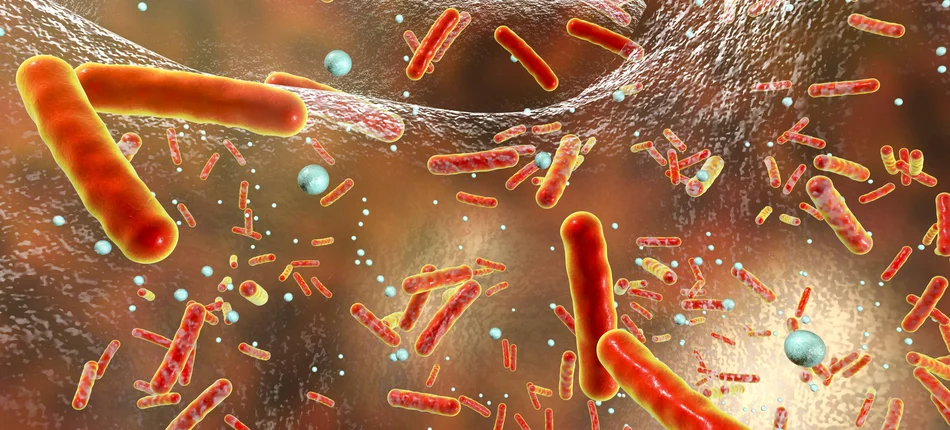
Fot. Getty Images/iStockphoto
The latest results of research conducted at the Institute of Biochemistry and Biophysics of the Polish Academy of Sciences prove that science can effectively help prevent and combat diseases caused by antibiotic-resistant strains of this staphylococcus. How? By introducing bacteriophages (viruses that infect only bacteria) and bacteriocins (small proteins produced by some bacteria against other microorganisms) to fight them.
- Through years of research, we have demonstrated the high antitumor efficacy of our unique bacteriophage combinations. We have developed a methodology for obtaining them, obtaining a homogeneous, genetically pure preparation," says Prof. Dr. Malgorzata Lobocka, head of the Laboratory of Bacteriophage Biology at the Institute of Biochemistry and Biophysics of the Polish Academy of Sciences.
It turns out that properly selected bacteriophage kits can destroy as much as 90 percent of drug-resistant strains of Staphylococcus aureus. And such kits in the form of ready-made preparations have been developed by Prof. Lobocka's team. - Once the production process has been refined, they will be able to treat, for example, staphylococcal-infected skin without destroying the beneficial bacteria present in those areas. This includes staphylococcal acne infections commonly afflicting the younger generation. We can prepare a bacteriophage for any strain of staphylococcus," explains the biologist.
This has been demonstrated, among other things, by experiments on nematodes. The effectiveness of bacteriophage preparations was determined both by the survival rate of staphylococcal-infected nematodes after administration of bacteriophages and the disappearance of viable staphylococcal cells from their bodies.
In turn, Tamara Aleksandrzak-Piekarczyk, PhD, who heads the Laboratory of Applied Microbiology at the Institute of Biochemistry and Biophysics of the Polish Academy of Sciences, argues that bacteriocins can also act on different types of pathogens. This includes bacteria that pose a threat to public health, such as multidrug-resistant staphylococci or enterococci.
- Bacteriocins disrupt their function by destroying barriers that separate the bacterium from the outside world, such as the membrane or cell wall. This has been demonstrated in our experiments. This is because bacteriocins have properties that interfere with the basic life processes of the targeted bacterial cells, and this results in the inhibition of their growth or even death. As a result, the enemy dies and the patient gets better," the scientist explains.
In the case of bacteriocins, researchers sought answers to the question of how they bind to bacterial cells and how they work. Studies have shown that they attach to the receptor responsible for transporting sugars, or food, into the bacterial cell. The bacteriocin attached to the receptor leads to changes in the receptor's conformation, that is, it changes its shape, forming a channel in it. Through this channel, essential components of the cell escape to the outside, which ultimately leads to cell death.
Effectiveness without side effects on humans and the environment
Bacteriophages and bacteriocins can be effective alternatives to antibiotics, with the advantage of having little or no toxicity to human cells. This distinguishes them from antibiotics, which can cause serious side effects.
Both preparations work extremely precisely, that is, only on specific types of pathogenic bacteria. They leave human cells and beneficial microorganisms living in and on our body alone. - When administering bacteriophages, we do not destroy anything other than the targeted pathogenic bacteria," explains Prof. Lobocka. This minimizes side effects and allows for a quicker recovery of microbial balance after treatment, unlike antibiotics, which can disrupt the microbiome for a long time.
The same is true of bacteriocins, which, in addition, are rapidly broken down, meaning that they do not accumulate in tissues or the environment, and do not contaminate water or soil. This is important, because they thus reduce the risk of resistant strains of bacteria. It is worth noting that bacteriocins can be produced by probiotic bacteria, which makes them particularly attractive and safe for use in agriculture and the food industry as natural preservatives. They could therefore be an important element in the prevention of ambulatory infections and environmental protection. They would also be effective in treating hard-to-heal wounds and hospital-acquired infections," explains Dr. Aleksandrzak-Piekarczyk.
Will we forget about antibiotics? Combination therapies most likely
Since the results are already promising, does this mean that antibiotics will soon be forgotten? The researchers point out that this is unlikely, but at the same time stress that the implementation of bacteriophage and bacteriocin therapies into wide access is necessary in the face of increasing antibiotic resistance. They add that phage and bacteriocin therapies may also play a supportive role to antibiotics. Combination therapies, combining antibiotics with bacteriophages or bacteriocins, may provide a safe and effective solution for the most difficult-to-treat infections.
- One can imagine a therapy in which we combine an antibiotic with a bacteriocin without increasing the cytotoxicity of such a preparation. In this way, the two components complement each other and enhance each other's effects to fight bacteria more effectively," notes Dr. Aleksandrzak-Piekarczyk.
- It must be admitted that some antibiotics work perfectly in combination with bacteriophages, and at the same time, from a purely medical point of view, this is a safe solution," Prof. Lobocka adds, stressing that this approach gives the maximum chance of therapeutic success, especially in the case of the most severe infections, such as those caused by ESKAPE bacteria, which include antibiotic-resistant Staphylococcus aureus.
Treatment with bacteriophages and bacteriocins is needed
The scientists' solutions are awaiting clinical trials. Poland, once a leader in phage therapy, thanks to, among other things, molecular research by scientists from the Institute of Biochemistry and Biophysics of the Polish Academy of Sciences, has a chance to maintain a prominent position on the world stage, especially in the area of combined therapies based on bacteriophages and bacteriocins. And there is much to fight for.
More than 35,000 people die each year from infections with multidrug-resistant bacteria in the European Union alone. That's the estimate of the European Center for Disease Prevention and Control. There is therefore much to fight for. The list of antibiotic-resistant strains of bacteria is growing, and with it the number of untreatable infections. According to the latest data from the European Center for Disease Prevention and Control, Poland's goal is to reduce total antibiotic use in humans by 27% by 2030. Meanwhile, antibiotic use has fallen by only 1.8% since 2019. Therefore, an important part of the fight against antibiotic resistance is to invest in the research and development of new antimicrobial agents that are alternative to antibiotics or support their effects.
source: press release