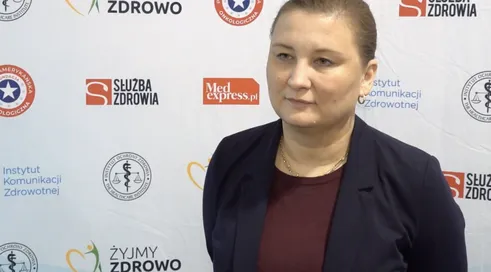
Loneliness is a silent epidemic of our time. Studies indicate that chronic feelings of loneliness can lead to a number of negative health consequences. For example, a review of studies published by "Holt-Lunstad et al." found that a lack of social relationships increases the risk of premature death to a similar degree as smoking 15 cigarettes a day, and even more than obesity and physical inactivity. - The study underscores how important it is for physical and mental health to maintain strong social ties. - says Dr. Mateusz Grajek, assistant professor in the Department of Public Health at the SUM's Department of Public Health
Loneliness reduces life expectancy like smoking 15 cigarettes a day!

Published Feb. 13, 2024 17:49

Fot. Getty Images/iStockphoto
With the development of technology, dating sites have become a popular tool in the search for a partner. A study conducted by "Rosenfeld et al." found that meeting a partner online is now the most popular way to establish a romantic relationship in the United States. While dating sites offer easy access to potential partners and can make it easier to find someone with similar interests, there are also potential negatives. - Studies point to the risks of misinformation, over-selectivity and objectification, which can lead to frustration and discouragement in the process of finding a partner. - cites Dr. Grajek
The digitization of society is opening up new opportunities for finding a partner, but it is also creating challenges. In the context of dating sites, despite their growing popularity and acceptance, there is a need to be aware of potential psychological pitfalls, such as the "endless scrolling" effect, which can lead to feelings of discouragement and cynicism about the process of finding a partner. - Therefore, it is crucial to find a balance between using technology and maintaining healthy personal interactions, which are the foundation of deep interpersonal relationships. - adds Dr. Grajek
Love, the eternal emotion of mankind, has both a biological and psychological basis. Neuroscientific studies, such as those conducted by "Fisher et al," indicate that the feeling of falling in love activates the same areas of the brain that are responsible for reward and pleasure, including the release of dopamine. Psychologically, love involves building deep attachment, which is crucial for personal growth and building lasting relationships. Love and relationships go beyond personal happiness, playing a key role in building strong communities. As research shows, committed family and social relationships have an impact on social cohesion, mental and physical health of the population. With increasing mobility, globalization and social change, love and attachment can serve as stabilizing forces, helping people find a sense of belonging and support. As research indicates, love and closeness contribute to social cohesion, laying the foundation for lasting interpersonal and family relationships. - In societies where we increasingly see the breakdown of traditional social structures, love and relationships have become key elements in the search for meaning and belonging. - continues Dr. Grajek
In the digital age, where technology is gaining prominence in every aspect of human life, the way people establish and maintain relationships is being transformed. However, basic human needs remain the same. Looking ahead, it will be important to understand and adapt to changing social and technological contexts in building and maintaining relationships. This will require not only individual adaptation, but also social and cultural adaptation to foster healthy relationships in an increasingly diverse and connected world," concludes Dr. Grajek
TIPS FOR ONLINE DATING:
In the digital age, where the Internet has become a primary tool for finding new acquaintances and potential partners, it is important not to forget the dangers of meeting people online. These risks can include emotional and financial fraud, invasion of privacy, and potential threats to physical safety. To take advantage of the opportunities offered by dating sites and social networking apps while minimizing risks, it's worth following a few safety rules.
Emotional and financial fraud
One of the most common dangers is scams, in which people claiming to be potential partners exploit the feelings of others for financial gain. Such situations often begin innocently enough, with the building of trust and emotional closeness, to later escalate into requests for financial assistance under various excuses.
How to avoid:
Ø Never send money or share bank details with people you meet online.
Ø Be skeptical of pity-inducing stories or dramatic requests for financial assistance.
Invasion of privacy
Sharing personal information online can lead to privacy violations, including stalking or using data for unauthorized purposes.
How to avoid:
Ø Be cautious about sharing personal information, such as home address, workplace or contact information.
Ø Use privacy settings on dating sites and social media to control who can see your posts and profile information.
Threat to physical security
Meeting people you meet online carries risks, especially if you don't know much about the other party. There is a possibility that the person you are dating is not who they say they are.
How to avoid:
Ø Make first appointments in public places such as cafes or parks where there are a lot of people.
Ø Inform your friends or family about the place and time of the meeting and who you are meeting with.
Ø Listen to your intuition; if something seems wrong, it's better to be safe and cancel the meeting.
Catfishing and fake profiles
"Catfishing" is the creation of fake online profiles to deceive others, often with dishonest intentions. This can lead to emotional hurt and lost time.
How to avoid:
Ø Check the credibility of profiles, for example, by searching for images on Google to see if they are being used in other contexts.
Ø Be cautious if the person seems "too good to be true" or avoids showing up on video.
Source: SUM
Topics
Mateusz Grajek / cyfryzacja / samotność / Śląski Uniwersytet Medyczny / portale randkowe / Walentynki / Catfishing