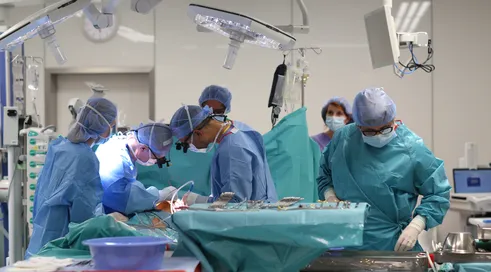
- The methods of treating hemophilia at our disposal in Poland do not differ from European standards. They make it possible to treat patients with missing coagulation factors. From a purely surgical point of view, the procedure does not differ from the one we perform in patients without blood clotting disorders. However, the absolute condition is to prepare the patient for such an operation - said in an interview with Medexpress prof. Piotr Paluszkiewicz, head of the Department of General, Oncological and Metabolic Surgery, Institute of Hematology and Transfusion Medicine.
Prof. Piotr Paluszkiewicz
Patients with haemophilia can be operated on, and proper preparation is needed

Published Sept. 22, 2022 10:13

Due to the specificity of this disease, patients with haemophilia need a special treatment regimen in the event of the need for surgery. What is the model of working with such a patient?
Models for working with patients with hemophilia were developed years ago and are ready today. The methods of treating hemophilia at our disposal in Poland are quite modern and do not differ from European standards. They make it possible to treat patients with missing coagulation factors. From a purely surgical point of view, the procedure does not differ from the one we perform in patients without blood clotting disorders. The absolute condition, however, is to prepare the patient for such an operation. It is about the pharmacological induction of proper blood clotting, at least for the operation and perioperative period. Most of the time this is successful, but some people have what is known as an inadequate or inadequate response to their medications. Then the possibilities of surgical treatment decrease dramatically, because it is a gigantic risk. There are some ways we can apply in exceptional circumstances, as well as non-standard procedures that we have managed to develop within the institute.
What is access to facilities that safely operate on such patients?
In my opinion, there are conditions for this access to be as wide as possible. The first problem, however, is that we are dealing with rare diseases. In places where patients are not accumulated, there are some difficulties with gaining experience and developing algorithms. If one sick person appears somewhere in a few years, it is difficult to find staff with sufficient experience to lead such a sick person. The ability to correct a dysfunction of the blood coagulation system is not hampered by the lack of access to drugs. They are available everywhere and are part of the hemophilia treatment program, so they are free to hospitals. Only a small effort is needed to complete the order and deliver the preparation to the hospital. In my opinion, an obstacle is often the reluctance or the need for additional involvement of such a center.
There are times when hospitals want to send hemophilia patients to your clinic?
I have such calls every few days, anyway unjustified. The institute's resources make it impossible to treat the entire country in one place. You have to adapt to modern medicine. Decades ago, the factors were unattainable and the knowledge about them was negligible. It was a gigantic problem then. Today, they are widely authorized, easy-to-reach drugs. The mere fact that a patient has hemophilia should not be an indication that he or she should be operated on within our institute. We have two surgery clinics: a general surgery clinic and a vascular surgery clinic. The needs of surgical treatment far exceed the capabilities of these clinics, because they concern, for example, urology or other specific specialties, for which we have neither the equipment nor specialists.
Staff shortages are a growing problem in hospitals. The Institute is also struggling with such difficulties?
We are absolutely no exception. Working in surgery at the Institute of Hematology can be attractive. We have a wide range of activities and we provide development opportunities. A huge number of patients with hemorrhagic disorders are not treated here. That's 60 to 80 people a year. It allows, however, to work out some ways of proceeding. This translates into the relative safety of surgical procedures.
The current hemophilia treatment program runs until 2024. Do you already know what the financing will be after 2024?
I do not know, but thanks to the enormous effort, mainly on the part of people associated in the associations and with the support of doctors, such a program was created. Thanks to it, there is easy access to drugs and they do not burden the budget of the individual, despite the fact that these preparations are sometimes horrendously expensive. It is a big success. Patients, due to the specificity of the disease, require longer hospitalization and more frequent diagnostic tests. This is not reflected in the valuation of benefits by the public payer. I strongly believe the administration will take care of this.