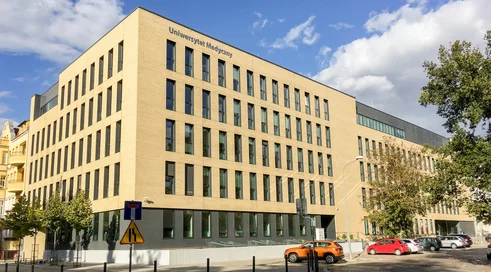
The Medical University of Silesia in Katowice, together with the University of Silesia and the Jerzy Kukuczka Academy of Physical Education in Katowice, has been granted a US patent for an innovative medical solution for an organic membrane blood oxygenator, or new ECMO. The patent was granted by the United States Patent and Trademark Office (USPTO) under the number US 12,623,010 B2 on May 12, 2026.This is new hope for patients.
Silesian Medical University co-inventor of US patent for innovative blood oxygenator, or new ECMO

Published May 25, 2026 11:40
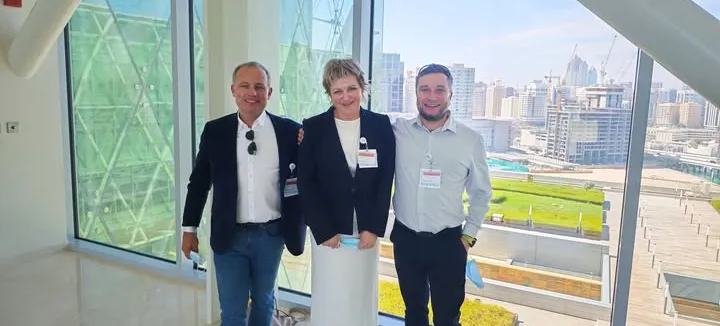
The invention "Blood oxygenator with an organic membrane" represents a modern solution in the field of respiratory support technology and extracorporeal gas exchange. The developed device enables efficient blood gas exchange using an organic membrane, which can find application in intensive care, cardiac surgery and modern ECMO systems, among others. To date, the therapy method is only feasible for certain clinical conditions.
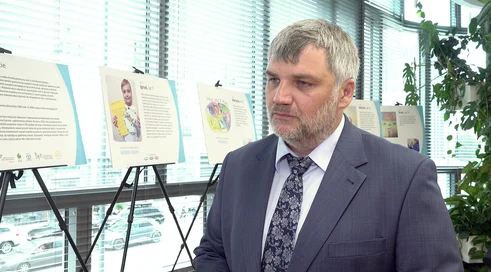
- Obtaining patent protection in the United States is an important step in the process of internationalizing the results of scientific research conducted at the Silesian Medical University and confirms the high implementation potential of the biomedical technologies under development. The granted patent increases the possibility of commercialization of the solution on the international market and opens the way for further cooperation with industrial and medical partners," says the co-author of the invention, Prof. Szymon Skoczynski, head of the Department of Pulmonary and Tuberculosis Diseases of the Faculty of Medical Sciences of the Silesian Medical University in Zabrze, a specialist in respiratory diseases and respiratory pathophysiology.
The invention was filed in the international PCT procedure under the number PCT/IB2021/061015, with priority to applications filed in Poland in 2020.
The OXIFlame (Oxygen Increased Flow Advanced Membrane) medical device could usher in a new era in the treatment of patients with severe cardiopulmonary failure. The developers of the project, representing the Silesian Medical University in Katowice, hope that the time has come for a successor to extracorporeal membrane blood oxygenation ECMO.
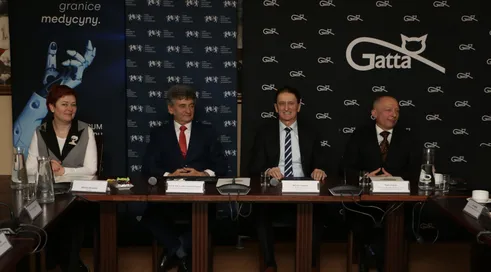
OXIFlame's innovative solution won the jury prize in the 6th Start-Up-Med Competition, in the medical/scientific center category. The competition was a side event of the 9th Health Challenges Congress in Katowice, Poland.
The extracorporeal membrane oxygenation (ECMO) technique involves oxygenating the blood and eliminating carbon dioxide from it in an oxygenator, using extracorporeal circulation.
However, current ECMO has some limitations. First and foremost, the technique is used only in patients, in potentially reversible life-threatening conditions with very severe respiratory or circulatory failure, who have failed to respond to conventional treatments available in intensive care units. ECMO does not cure the heart or lungs, but gives the patient a chance to survive the period when these organs are failing. That is, it gives the doctor time to treat the disease that has led to extreme cardiopulmonary failure.
The work carried out resulted in the development of OXiFlame, a completely new concept in the design of the oxygenator, which allows the device's operation to function under oxygenation conditions much closer to the physiological ones observed in nature.
The created design of the device is built from completely different materials than before. Made from scratch, the plastics feature a smooth surface that reduces the likelihood of thrombus formation. In addition, the porous material is filled with anticoagulant particles.
Such innovation makes the created material "alive", just like the wall of a blood vessel and subject to interaction with the flowing blood.
The anticoagulant molecules that are sheared off the device's surface by flowing blood during operation are replaced by new ones that diffuse (flow) to the surface from within the material protecting it from clotting. This phenomenon, along with the functioning of the device, improves permeability to gases, which currently, in the currently functioning ECMO, deteriorates with time of use.
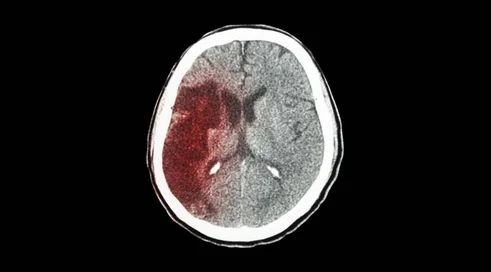
Thanks to the innovative approach, it will be possible to reduce the oxidative stress observed in currently functioning ECMO, which intensifies vascular endothelial activation, activates the coagulation system and contributes to leukocyte activation, migration and generalized inflammatory response. These phenomena are responsible for the complications currently observed during ECMO therapy, such as bleeding or clotting. If the supply of anticoagulant is too low, they threaten arterial embolisms or strokes. Other common complications of oxidative stress are infections, sepsis and septic shock. This creates the need for frequent replacement of the currently functioning oxygenator in ECMO (recommended by manufacturers to be as short as 14 days). The material used in OXiFLAME, thanks to the proposed concept, avoids these drawbacks.
The next stage of the initiative during the development of OXiFLAME was the creation of a completely new oxygenator, operating on the principle of a physiological countercurrent, taken from the normal histological structure of the lung or kidney. This makes it possible to significantly reduce oxygen supply to concentrations lower than 50 percent of the respiratory mixture. As a result, it is possible to significantly reduce oxidative stress, reduce the likelihood of complications and, in the process, extend the life of the device.
The structure of the oxygenator and the use of a double circuit of flow through filters created from the same material also allow the removal of thrombi from the system without the need to replace the oxygenator (currently technically problematic and potentially hazardous to the patient). Any micro-thrombus will not find its way into the mainstream blood stream because of the vortex motion, allowing it to move effectively.
OXiFlame was first presented at the ELSO-ECMO conference in Boston in 2022, where it was recognized as the most interesting convention report. The solution is protected by numerous Polish patents.
- For rapid implementation and testing in laboratory and clinical settings, cooperation with the biomedical industry is necessary, which we are open to," explains Prof. Skoczynski.
He adds that with the financial support, R&D can be accelerated, production can be scaled up, and clinical trials can begin, which will help bring OXIFlame to market faster and provide patients with access to a modern and effective therapy.
- The technology was developed by an interdisciplinary team of scientists and experts representing three Silesian universities. Among the creators of the invention were: Andrzej Świnarew, Hubert Oksa, Jadwiga Gabor, Mateusz Przybyła, Ewa Trejnowska, Szymon Skoczyński, Grzegorz Brożek, Agnieszka Skoczyńska, Piotr Knapik, Michał Zembala, Tomasz Darocha, Karol Mendrala, Katarzyna Mizia-Stec and Arkadiusz Stanula," explains Wojciech Borówka, Technology Broker of ŚUM, responsible for commercialization and technology transfer of OXIFlame.
Source: Silesian Medical University