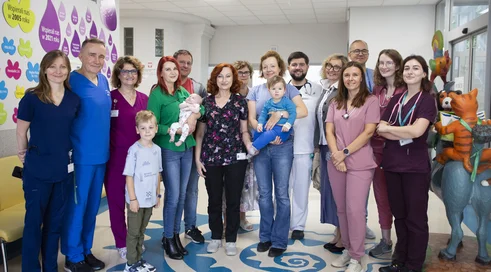
Cardiologists from the Silesian Center for Heart Diseases in Zabrze implanted a electrodeless pacemaker in a patient with an extremely rare heart defect for the first time in Poland.
Stimulator straight to the heart! The first such procedure in Poland by cardiologists from the Medical University of Silesia. And third in the world

Published Dec. 22, 2022 08:31
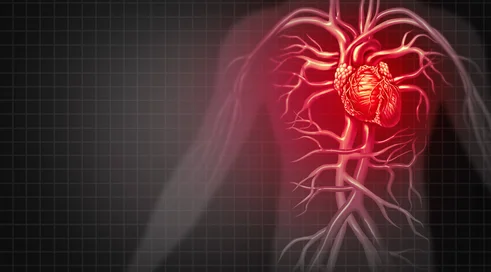
Fot. Getty Images/iStockphoto
- Classic transvenous pacemakers consisting of a generator and electrodes connected to it inserted inside the heart through a vein were until recently the only option. In the group of patients to which our patient belongs - with corrected transposition of the great arteries and a single-ventricular heart - the use of a electrodeless pacing system was the optimal solution - explains Dr. hab. n. med. Mateusz Tajstra from the 3rd Chair and Clinical Department of Cardiology of the Medical University of Silesia in SCCS in Zabrze.
The patient was implanted with the most modern Micra (Medtronic) electrodeless cardiac pacemaker - a device measuring less than 1 cm 3 and weighing 1.8 g. The 42-year-old patient is already after the procedure, feels good and has been discharged home. The defect with which he was born is 0.5 - 1 percent. congenital heart defects and is very complicated. He came to the Center in Zabrze with symptomatic complete heart block.
Two implant procedures using Micra stimulators have been described in the medical literature so far. The one conducted in Poland is the third in the world!
- Corrected transposition of the great arteries to a univentricular heart is characterized by incongruent atrioventricular junction (right atrium to left ventricle, left atrium to right ventricle) and inconsistent ventricular-arterial junction (aorta to right ventricle, pulmonary trunk to left ventricle). As a result, blood from the systemic veins returns to the right atrium, then flows to the anatomical left ventricle, from which the pulmonary trunk departs. Blood from the pulmonary veins returns to the left atrium, which is connected to the anatomically right ventricle, from which the aorta branches off - explains Prof. Oskar Kowalski, head of the Electrophysiology and Heart Stimulation Laboratory at the SCCS.
It is worth adding that this defect almost never occurs as an isolated defect. - The heart's electrical system is disturbed, and as a result, the heart beats too slowly - assesses prof. Kowalski.
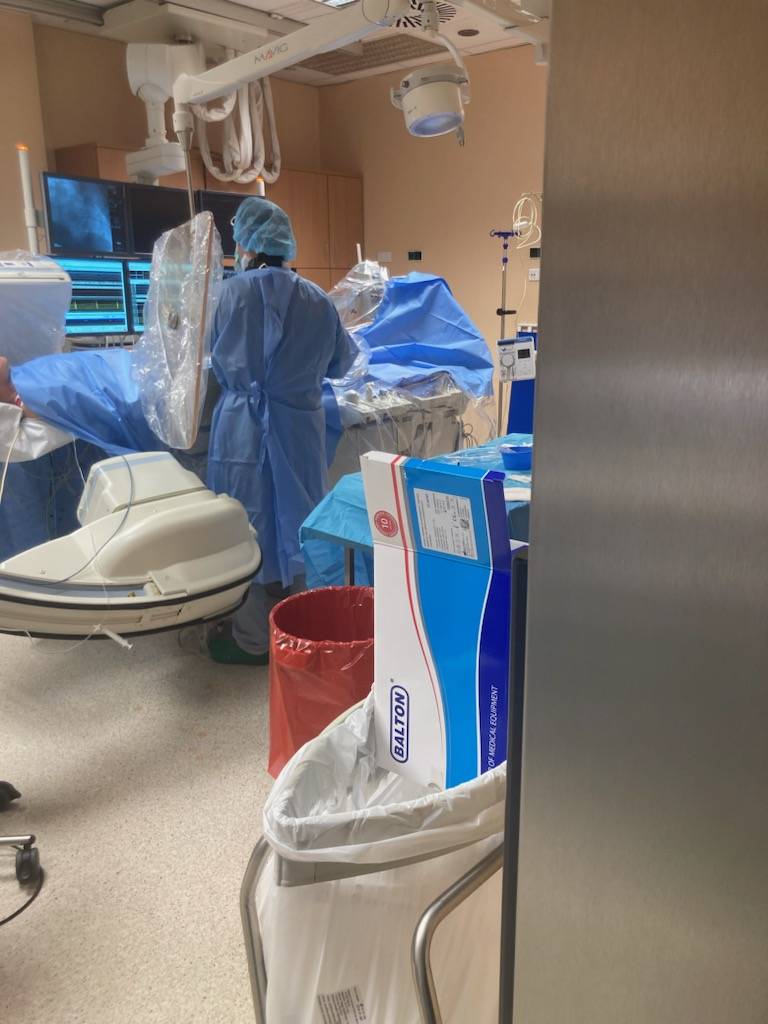
The procedure was attended by: prof. dr. hab. Oskar Kowalski, dr hab. Mateusz Tajstra, medicine. Anna Kurek, anesthesiologist: Jacek Piątkowski, MD, PhD and the technical and nursing team: Przemysław Duda, Lucyna Matkowska, Katarzyna Szczęśniak.
Source: SUM