Hormonal changes affect the physical and mental well-being of nearly nine out of ten Polish women. At the same time, many women feel left behind - they lack reliable information, support from the health care system and open social discussion about menopause. These are the conclusions of the study "Impact of hormonal changes - women's assessment," conducted by Kantar Poland on behalf of the Zyjmy Zdrowo Foundation.
90% of Polish women are affected by hormonal changes. The survey shows the scale of the problem

Published June 12, 2026 11:02
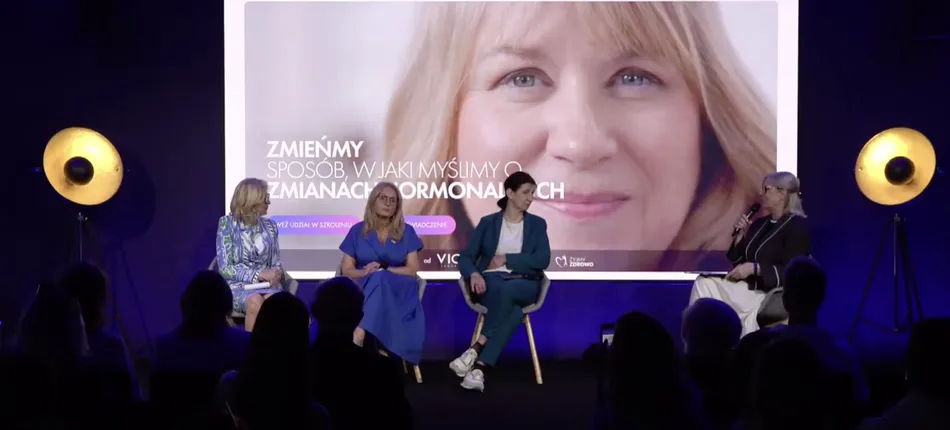
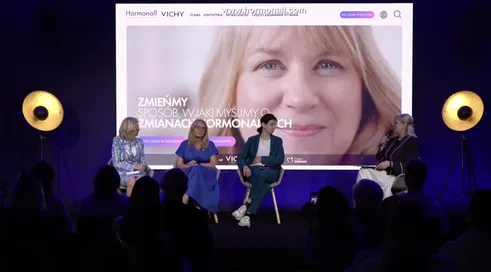
The Zyjmy Zdrowo Foundation presented the results of the survey "Impact of Hormonal Changes - Women's Assessment," conducted by Kantar Poland as part of the Hormonall educational project. The report shows that the impact of hormones on daily functioning is felt by women of all ages, and their needs in this regard are still inadequately addressed by the health care system.
Hormones affect quality of life
According to the survey, as many as 89 percent of female respondents indicated that hormonal changes affect their physical and mental well-being. For 86 percent, they affect mood, for 83 percent they affect the condition of their skin, and for 76 percent they affect the condition of their hair.
- Younger ladies tend to feel all of these conditions more intensely, but all of them, including those in menopause, say it is common, notes Dr. Izabela Anuszewska of Kantar Poland.
The results show that regardless of age, women similarly assess the impact of hormonal changes on quality of life, well-being and appearance.
Women feel left behind
Respondents were also asked about emotions surrounding hormonal changes. They most often cited feelings of helplessness (37 percent), lack of support from doctors and other health care professionals (36 percent), and the belief that it is a taboo subject (31 percent).
Of particular note is the assessment of support from the health care system.
- Comparing the results of this survey with a similar survey conducted in France, Germany, the U.S. and Brazil, we see that in Poland, lack of health care support ranks second among the most common answers to this question, while there it ranks seventh. What does this mean? That in our country the sense of support from health care is particularly felt to be inadequate. The lack of health care support sets our country apart," stressed Dr. Izabela Anuszewska.
A greater role for primary care physicians is needed
According to Prof. Urszula Demkow of the Medical University of Warsaw, the topic of menopause has remained on the margins of public debate for many years.
- There was talk about contraception, about in vitro, about endometriosis. However, when it came to menopause, there was silence. Meanwhile, this is a huge group of ladies and will become bigger and bigger," he points out.
The expert notes the need for primary care physicians to be more involved in recognizing the symptoms of menopause.
- If a peri-menopausal woman comes to her family doctor and says she has palpitations, he should take menopause into account and refer her to a gynecologist as well, she points out.
As Prof. Demkow stresses, every woman entering menopause should be able to obtain professional information on hormone therapy, its indications and contraindications.
Education needed not only for women
The survey also shows that menopause remains a topic that is still too rarely discussed. Nearly half of female respondents believe that the issue of hormonal changes associated with menopause is not present in the public debate. Many women also report a lack of support from family (22 percent) and life partners (23 percent).
- The women we talk to in our association say that no one prepared us for this, no one talked about it. We need education in the social dimension, in the dimension of employers," says Wieslawa Rybicka-Bogusz of the Women at the Center Association.
Prof. Ursula Demkow points out that midwives could play an important role in education.
- In some regions of the country, there are far too many of them and they are losing their jobs. Their educational paths should put more emphasis on menopausal education. There is a knowledge deficit, and when a woman suddenly wakes up at night covered in sweat, can't sleep, gets weepy, irritable, has brain fog, she thinks she's sick. Meanwhile, a midwife can explain to her why this is happening, she suggests.
Menopause also a challenge for the labor market
Experts point out that menopause also has a social and occupational dimension. Women are staying active in the labor market longer and longer, and symptoms associated with hormonal changes can affect their professional functioning.
- Women often do not understand medical language. In the association we educate ourselves, improve ourselves, participate in workshops. We are ambassadors of menopausal prevention. Talking woman to woman in ordinary, non-medical language makes us feel safe and understood. Any such dialogue weakens the power of taboos," Wieslawa Rybicka-Bogusz argues.
Dr. Izabela Anuszewska also points out the need for a broader view of the problem.
- This is a social and professional problem," he points out.
Prof. Ursula Demkow stresses that many ladies could stay active longer if they received adequate support.
- There are countries where there are menopause ambassadors in larger companies who can be approached. They organize online meetings where semi-anonymous ladies can meet and tell what ails them. Employers introduce flexible working hours, offer a place to shower, change clothes. If women are provided with support, understanding, flexibility in the work environment, they will want to work longer," Professor Demkow concluded.
More about menopause: Hormonall.com