In Poland, the health minister sees that people are happy because KPO funds are flowing to hospitals, while in the Czech Republic 80 percent of citizens are happy with a well-functioning health care system. The level of happiness in the area of health remains somewhat imbalanced in our countries, and there are no prospects of this changing. Although not, in fact, some experts predict that in the next ten, or so, years our southern neighbors will "drive away" from us in such a way that we won't even see the tail lights of the train (and no, it's not about, exceptionally, also better than Polish transport policy).
Małgorzata Solecka
Feature
"We wanted to catch up with the West. It hasn't happened yet." - What Poland doesn't want to hear

Published May 18, 2026 19:28
During the Polish-Czech health summit, which took place last Friday, May 15, in Opole, differences and similarities were discussed (there is a lot separating us, but to much surprise, the systemic problems are surprisingly similar, from the "underdevelopment" of long-term care to the problems with hospitalization - slightly different than in Poland, but strongly affecting). What is worth noting - Czechs are more willing to stand firmly on the ground and see things as they are.
When in Poland self-proclaimed analysts create charts showing that "Polish health care workers earn on average 2.9 national averages," which puts them in the European top tier (untrue on many levels, starting with the fact that they are not health care workers but specialists), the Czechs show what doctors' earnings are like: they are, roughly, 35-40 percent of German earnings ($89k PPP vs. $207k) and nearly a third less than the OECD average. In Poland, these proportions are better at the moment - $108 thousand PPP vs. $133 thousand for OECD countries, despite clearly lower - per capita outlays, but really far from the European top. Czechs, apparently, do not like illusions, knowing that large disparities in the level of salaries will always be a risk factor for the emigration of professionals, especially if they do not have to look far to improve conditions, and literally "across the border" the shortage of doctors is becoming more acute.
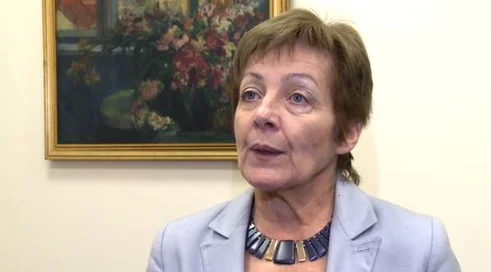
For years, it has been obvious that the Czechs among the former communist bloc countries have made the greatest - and most successful - transformation in the field of health care, although in recent years there has also been a lot of talk about Slovenia, which has also set its sights (perhaps more than the Czech Republic) on public health, without neglecting both the financing and organization of the system. The Czechs and Slovenes are even seen as countries that, in the area of health, have almost entered (or just entered) the club of "old" Europe. They themselves - as Prof. Petr Fiala said in Opole - still see it as a challenge, not an accomplished fact. Also in financial terms, because the growth in health expenditures has slowed down after the pandemic peak. Is this the result of clearly higher health expenditures (higher public spending, higher GDP, which translates into a difference in per capita spending), or of a well-thought-out, coherent and consistently implemented concept for thirty years - though not without mistakes - that has guarded against turning the tables and trying to build everything from scratch on the principle that "my right is most generous"? Or is it simply that the Czechs know where they are and where they are going? Extremely poignant were the words of Prof. Fiala, who stated: - When we started the transformation, we wanted to catch up with Western Europe. This has still not succeeded.
So maybe it's simply a matter of real diagnosis, saying goodbye to the power dream and looking at things as they are?
Topics
finansowanie ochrony zdrowia / polsko-czeski szczyt zdrowotny / transformacja ochrony zdrowia / system ochrony zdrowia w Czechach / minister zdrowia / system ochrony zdrowia / Małgorzata Solecka / nakłady na zdrowie / KPO / lekarze / zdrowie publiczne / wynagrodzenia lekarzy / emigracja lekarzy