The symbol of rebirth and a culinary staple of Easter are eggs. It is worth remembering that eggs are a valuable product and should not be missing from the daily diet either. The wide use of eggs is due to their high nutritional value, desirable sensory qualities, but also because of their use in thickening dishes, fluffing up, binding ground products such as stuffings, pates, or chops, and because of their emulsifying properties.
Egg Atlas. Learn which are the best

Published April 18, 2025 08:02
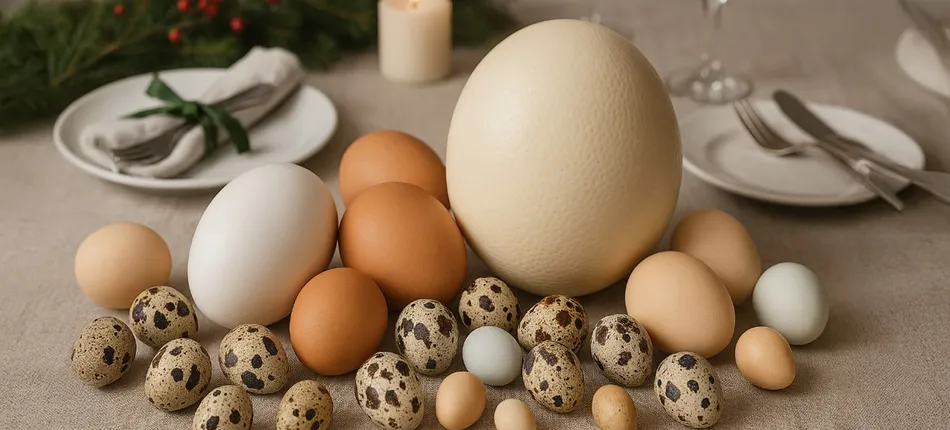
The chicken egg is most commonly used in the Polish diet despite the fact that eggs from other species of birds, such as geese, ducks, quail , guinea fowl or turkey, are also available. Tiny quail eggs are also popular, and occasionally duck, goose or giant ostrich eggs. In the gastronomy and for consumption purposes are used primarily hen eggs, while eggs of other poultry species (turkey, duck, goose), due to the low carrying capacity are and intended for hatching purposes and therefore occasionally consumed.
Fat accounts for 9.7%, and consists of triglycerides, phospholipids and cholesterol. The fatty acids in the egg are high in biologically active EFAs (Essential Fatty Acids). In addition, the yolk contains all fat-soluble vitamins A, D, E and K, B vitamins including folic acid, lutein involved in normal vision, and minerals such as iron and zinc. On the other hand, protein is a source of essential amino acids, which makes it characterized by high biological value and can be a substitute for meat in the diet of vegans.
In stores, chicken eggs are usually available in different sizes from S- the smallest to XL - the largest - they differ not only in the weight of 1 piece but also in price. Eggs also have different markings so-called types from 0 to 3, which are located on the shell.
So what do the individual numbers 0, 1, 2 or 3 mean?
Well, eggs marked "0" are eggs from organic farming, where the hens are raised on a conventional farm, they are not given antibiotics and other drugs, and the food comes from organic farming,
Eggs numbered "1" are free-range eggs, and their feed is not subject to strict inspection for organic origin.
Numbered "2" are eggs from barn farming where the hens are allowed to roam around a special coop, but do not go outside and are given special feed.
The number "3 "stands for caged eggs where the hens are caged in the coop all the time and are fed special food.
The question which eggs are worth choosing? It is worth choosing eggs labeled as low as possible, because they come from free-range hens and are fed natural food.
In addition to chicken eggs, other eggs are available for sale, such as quail eggs. Due to the higher proportion of yolk, they are characterized by higher caloric content, but also higher content of iron, copper and polyunsaturated fatty acids. Such eggs are much smaller, but their taste and culinary use are no different from those of traditional chicken eggs. Quail eggs are 1/5 of a chicken egg and weigh about 10 g on average. Although they are very small they are readily consumed due to the high proportion of yolk relative to protein. They are also rich in antioxidants, protein, iron, riboflavin and B vitamins, including vitamin B12.
People with hypoglycemia or hypotension should avoid eating too many quail eggs, as they can lower blood sugar and blood pressure. People who are allergic to quail eggs should avoid eating them because they can cause an anaphylactic reaction.
Duck eggs are a real treasure trove of flavor in the culinary realm. They have an intense flavor and delicate texture, a more pronounced taste than chicken eggs. The taste of eggs may depend on the diet of the bird, but they are usually distinguished by a more intense flavor.
Duck eggs stay fresh much longer than chicken eggs, mainly because of their naturally thicker shell and inner membrane. This is likely due to the fact that wild ducks often lay their eggs near water, making it necessary for the shell to protect them from moisture and mud.
Duck eggs contain a lot of nutrients. More vitamins and minerals than their chicken counterparts. They are rich in protein and vitamin B12, and contain more omega-3 fatty acids, vitamins A and D, choline, selenium, folic acid and iron than chicken eggs.
Duck eggs are characterized by a creamy texture. With much more yolk and higher fat content, duck eggs have a richer flavor compared to chicken eggs. The protein in duck eggs is denser, which makes them ideal for cooking in shirts or as fried eggs.
Duck eggs are ideal for those with chicken egg allergies, as they have a different protein profile, meaning they can be consumed by those intolerant to chicken protein.
Duck eggs are excellent for baking, due to their higher fat and protein content and lower water content compared to chicken eggs. That's why you should use them for making fluffy cakes, meringues, soufflés and light cakes and breads.
Duck eggs are larger than chicken eggs, and the yolk-to-white ratio is higher, making them ideal for baked goods. They give cakes a golden color and rich flavor, and baked goods made with duck eggs are moister and fluffier, rise better and hold their shape well. Duck eggs work better than chicken eggs in creams because they contain less water and more fat. Keep in mind that there are three duck eggs for every four chicken eggs.
Like duck eggs, goose eggs, because of their flavor, will not always taste good to us right away. Their higher yolk-to-protein ratio makes them an important source of fat, which contributes to the richer taste, but also the higher energy value of these eggs.
Goose eggs provide large amounts of essential nutrients such as folic acid, vitamin B12, vitamin A, selenium and iron, and are rich in protein. However, due to their high cholesterol and fat content, they are not recommended for diabetics or people with high cholesterol.
Turkey eggs
Why don't we eat turkey eggs? Because turkeys are raised primarily for meat, and turkey eggs are not available for the mass consumer market. The sole purpose of commercially raising laying turkeys is to produce hatching eggs, not turkey eggs for consumers. Comparatively, laying hens can lay about 300 eggs in a year, while female turkeys, depending on their breed, lay between 75 and 130 eggs during the breeding season. Turkey eggs differ little from chicken eggs in terms of taste and nutritional value, and are most similar in composition.
Guinea fowl eggs are smaller than chicken eggs and differ from them in shape, they have a rather hard brown shell The carotene and vitamin A content of guinea fowl egg yolk is four times higher than that of chicken eggs. The nutritional value of guinea fowl eggs is higher than chicken eggs, so they are recommended for feeding children and convalescents. They are recommended for people with allergies to chicken egg white.
Stored at a temperature of 3 - 70 C, they maintain freshness for many months. They are top-rated in terms of taste.
Ostrich eggs are still a rare product on our tables 1pc costs about 147zl. Ostrich lays the largest eggs among birds, the egg is up to 18 cm long. Ostriches lay eggs only in the warm period, i.e. from March to October, and one ostrich egg is the equivalent of 18 to 24 or even more chicken eggs.
The high proportion of polyunsaturated fatty acids in the yolk and the low cholesterol content make ostrich eggs much healthier than chicken eggs.
What can we prepare from an ostrich egg?
From one ostrich egg we can prepare a meal for the whole family, because a portion of scrambled eggs from one ostrich egg is enough for up to 10 people. To prepare scrambled eggs, the eggs need to be well beaten into a pulpy mass and only prepared.
Due to the specific structure of the protein, ostrich eggs are used more often in the preparation of crumpets and omelets. The yolk is velvety, and the white is better beaten. We can hard boil then we need about 1, 5 hours of time. Soft-cooked ostrich egg we will cook at least 45 minutes (sometimes it is even an hour).
What does an ostrich egg taste like?
Ostrich eggs are neutral in taste, very close to chicken eggs. The texture, however, is creamier and more gelatinous. Ostrich eggs are slightly sweet in flavor when cooked. The flavor is rich and somewhat buttery.
In the egg yolk, there is a set of vitamins, except for vitamin C. There are especially many fat-soluble ones. Among the minerals in eggs are easily absorbed complexes of phosphorus, selenium, iron and zinc. An ostrich egg contains less cholesterol than a chicken egg
What is a roe?
Eggs are the general name for the eggs of all fish species. Every fish produces eggs, and their taste and texture are different depending on the species of fish they come from. The most popular sources of eggs are fish such as salmon, trout, pike, as well as sturgeon fish, which produce the world's most famous caviar.
Caviar is roe only from sturgeon fish, such as beluga, osetra and sevruga, which live mainly in the Caspian Sea. In order for the roe to be called caviar, it must meet strict quality standards, as well as come from specific species of fish. The most expensive and prized variety of caviar is beluga caviar, which has a delicate buttery taste and velvety texture.
Caviar is a luxury product, often served on special occasions and considered a symbol of sophistication and prestige.
Prepared by: Agnieszka Bielaszka, PhD, Department of Dietetics, Department of Food Technology and Quality Assessment, Faculty of Public Health in Bytom
Topics
jajko / jaja przepiórcze / Agnieszka Bielaszka / dieta / wartość odżywcza / jaja kurze / Wielkanoc / jaja / Śląski Uniwersytet Medyczny