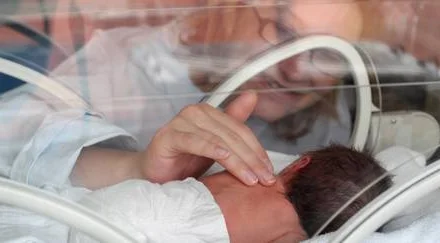
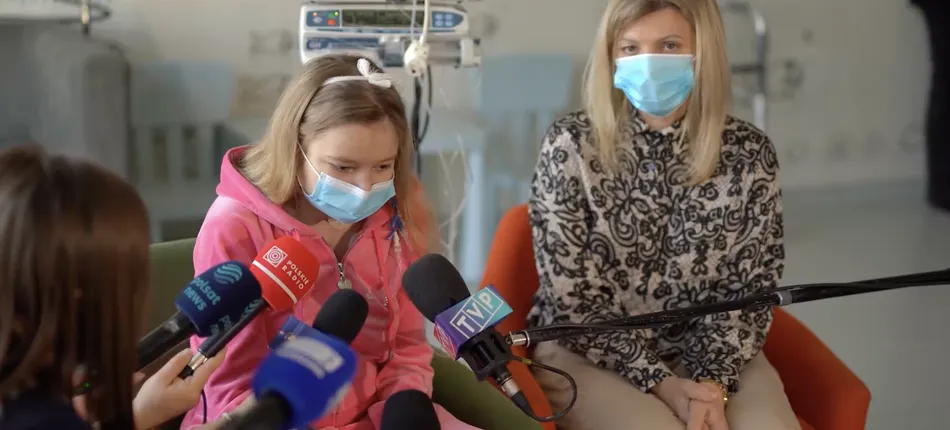
Olive is fourteen years old. She was born with a severe heart defect. Last year her condition deteriorated and the only salvation was a transplant. Since September, Oliwia had been alive only thanks to specialized equipment, at the Children's Clinical Hospital UCK WUM she was waiting for the gift of life. She received it from Lithuania on January 6. On the Feast of the Epiphany. - We are proving that the system is effective, that it works. Seven patients are alive and well. The latest transplant in a child shows that we can transplant hearts from pediatric donors from virtually all over Europe," says Dr. Michal Buczynski, Medical Director of the Children's Clinical Hospital UCK WUM, Department of Heart, Thoracic and Transplant Surgery at UCK WUM.
The heart has arrived from Lithuania. Success of doctors from UCK WUM

Published Jan. 22, 2025 08:02
The heart was transported from Klaipeda by car. The ambulance contained the OCS Heart device, which kept the organ alive. The beating heart pumps blood taken from the donor, is constantly monitored, and it is even possible to administer drugs and nutrients to the heart. There is increased confidence that once the heart is implanted in the recipient's body, the blood vessels are connected and the clamps are removed - the heart will start working.
The heart that Olive received worked outside the human body for seven and a half hours. Using standard transport techniques, i.e. storing the organ in hypothermia (ice reduces the organ's temperature to 4 degrees), the time from retrieval to implantation is four hours. Using a device such as the OCS Heart extends this time to as much as 12 hours.
"I feel good, I am already healthy. I was born with a heart defect. When I was little I was in the hospital a lot. Now, on September 1, I came to the hospital for another heart surgery, but things got complicated. I got this artificial ventricle and had to have a transplant. Since then I've been in the hospital all the time. Now I'll be out for another month at most, and I dream of going to Italy, to Rome, when I get out. I would also like to go to high school." - says patient Olive.
The use of equipment for transporting organs in normothermia (human body temperature) and with the use of perfusion (flow of body fluids) makes it possible to transport organs to Poland from all neighboring countries by car. Using air transport - from all over Europe.
Increasing the time from procurement to implantation contributes to a significant increase in the number of available organs. Poland is part of the Eurotransplant system. It assumes priority for the recipient in the donor country. However, if the recipient is not there, participants in the system get information about organ availability. Transplant coordinators, who are on duty around the clock, determine within minutes whether transplantation is possible and start the procedure.
The latest medical technologies are providing transplantologists with entirely new tools. Devices for keeping organs alive outside the human body (ex vivo) provide new logistical (organ availability) and medical (ability to test an organ before implanting it in a recipient) opportunities. Such technologies are available for transporting hearts, lungs and livers.
"Now we can shorten ischemic time, restore blood flow immediately after the organ is harvested from a deceased donor, restore blood flow in the machine. First of all, we significantly shorten the ischemic time, and it is with it that many risks in transplantation are associated. And secondly, by recreating the blood flow, we get information on whether the organ is already working after donation. With this, the risk is no longer on the side of the recipient. We conduct all biochemical tests, functional observation of the organ in the machine. This gives us a great deal of information about whether this organ can be used safely for a potential recipient." - Explains Prof. Michal Grąt, pro-rector of WUM, head of the Department of General Transplantation and Liver Surgery.
The Ministry of Health has recently initiated programs to fund lung and liver transport and perfusion.
Doctors at the Department of Heart, Thoracic and Transplant Surgery at the University Clinical Center of Warsaw Medical University (UCK WUM) have performed seven transplants using the OCS (Organ Care System) Heart since last March. The devices were financed by collections realized by the Foundation for Transplantation. The one-time cost is more than 200 thousand zlotys.
"We started looking, I have this team, we started playing for transplantation, we set up a foundation, where we do two programs: an awareness one, called Leave Your Heart on Earth, where we spoke to young people about donation, and the second one, 12 Hours for Life, was already raising money. We purchased equipment, went to Bremen for training, and then there was already the first trip." - says Dr. Zygmunt Kalicinski, transplantologist, president of the Foundation for Transplantation, leader and drummer of the HLA 4 transplant band.
The Foundation for Transplantation has been running the "12 Hours for Life" project for six years. As part of the project, the foundation raises funds from institutional donors (companies, private entrepreneurs and other non-institutional donors) and organizes concerts, the proceeds of which are used to purchase equipment. Money covering the cost of transporting a heart for Oliwia was raised at the Sanah concert in Mragowo.
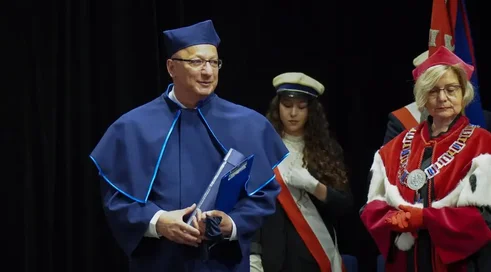
"As rector, I am immensely proud and pleased that transplantation is developing so wonderfully at our university and in our teaching hospitals. I can see how the number of procedures and the level of sophistication are increasing, all so that we create the best possible chances of survival for our patients." - says Prof. Rafal Krenke, rector of WUM.
Source: WUM
Topics
Oliwia / Eurotransplant / transplantacja serca / Ministerstwo Zdrowia / transport organów / perfuzja / OCS Heart / serce z pudełka