A team of Polish researchers led by Prof. Konrad Rejdak, MD, PhD, from the Department of Neurology at the Medical University of Lublin, is participating in the international innovative COMFORTAGE project, which aims to develop a model of health care for people with dementia disorders and at risk of dementia. This model may prove very useful in the future, responding to the growing demand for neurological care due to the aging population, as well as modern lifestyles. The overarching goal is to modify the course of dementia disorders on an individual and population level. After several months of intensive administrative and preparatory work, the pivotal clinical part of the study, according to the proprietary protocol of the scientific group from Lublin, is about to start.
Clinical part of European anti-dementia project takes off. The Lublin-based scientific group has developed a proprietary protocol for the study

Published March 10, 2025 07:46
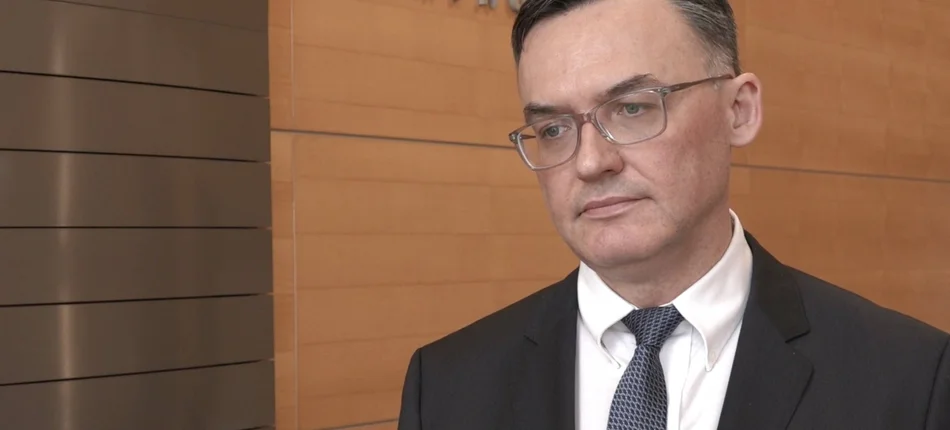
Fot. MedExpress TV
Professor, what is the COMFORTAGE science project about?
Prof. Konrad Rejdak: The COMFORTAGE - Prediction, Monitoring and Personalized Recommendations for Prevention and Relief of Dementia and Frailty project is an international, unique endeavor, funded by the EU's HORIZON Research and Innovation Actions program, with several clinical partners including the Gemelli Clinic of Rome, the University of Manchester, the University of Athens, the University of Ljubljana and our Lublin clinic as the only partner from Poland. According to the project, we will study risk factors for the development and progression of dementia in people over fifty without a diagnosis of dementia disease, but who may already have initial features of memory impairment. This will be an observational study, which means that for two years we will be in constant contact with patients, participating in the project, in whom we will conduct regular neuropsychological examinations and assess their cognitive functions. These patients will be able to benefit from free consultations, during which, based on their individual demographic and medical profile, they will learn what modifications to their existing lifestyle and previous medical management should be implemented to reduce the risk of developing dementia disorders. It can be said that patients will receive a personalized, specific "prescription for life." As part of the project, we will create an individual medical data account for each patient, properly protected in the IT space, of course, and both the patient and doctors will have access to this account. This data, anonymized, of course, I will use for scientific analysis and formulation of conclusions, which will be published in the future. What is important from a scientific point of view is that this is the first such large-scale project to test on a population level whether we can slow the progression of dementia. In total, data will be collected from about two thousand patients from all over Europe, based on individual and proprietary protocols created at each center. The result of the project will be the creation of a model of health care for people with dementia disorders and those at risk of dementia, which could prove very useful in the future, responding to the growing demand for neurological care due to the aging population, as well as modern lifestyles. The model will be, on the one hand, universal, but on the other hand - adapted to the realities of clinical practice in Poland.
How is the project being implemented?
Prof. Konrad Rejdak: The project was planned for four years. In mid-2023, our team from the Department of Neurology at the University of Lublin was invited to join the international consortium, and in December 2023, our University signed a cooperation agreement, as the initial project proposal was approved by the European Commission in a competitive procedure. Then intensive preparatory work began, discussions with all partners, and in August 2024 the five-member project team was officially established. Over the next three months, we developed a detailed protocol for an observational clinical trial. Each partner created its own separate proprietary protocol, but we will also use a wealth of shared data to build the model and management algorithm, as well as to analyze factors correlating with dementia progression. This analysis will go well beyond routine statistical analysis and will be carried out based on artificial intelligence. Our protocol has been prepared by public health specialists and neurologists to correspond to the realities of clinical practice in our country. This is because it is a nationwide project that also addresses the general problems of the health care system. Therefore, we are honored that the project team included - as a public health expert - Dr. Marek Kos, Undersecretary of State at the Ministry of Health. As a result, we were able to shape the protocol to fit our realities and the Ministry of Health's action plans on dementia diseases.
In November 2024, we were able to submit the required clinical trial documentation to the Bioethics Committee of the Medical University of Lublin, and in December 2024, we received full approval for the presented protocol. I am happy that after the administrative procedures and submission of the required applications, we are ready to start the clinical part of the project. On March seventh, we are holding an information and promotion meeting for the project, and we are starting to invite people interested in participating in the observational study for free consultations. It is worth emphasizing that the study is non-interventional, our specialists will not impose anything on the participants, they will only suggest various modifications, and patients will be able to take advantage of these recommendations or not. The implementation of the clinical part is scheduled for three years.
What hopes do you have for the results of this project?
Prof. Konrad Rejdak: A long preclinical period is characteristic for dementia, in which the disease is already progressing, but symptoms are not yet noticeable. This is the best time to implement an intervention that could halt the rise of dementia, but it is important to do it systemically, that is, at the level of health care in the population. That's why we are aiming to develop a model of care for people at risk of dementia, which could in the future be used in daily practice within the health care system in Poland. We hope that through such systemic preventive measures, we will be able to slow down the increase in the incidence of dementia diseases. We would like to prevent and reduce the incidence of dementia, as it is a disease with huge social costs, very burdensome for the patient himself, his family, and society as a whole.
Source: press mat.