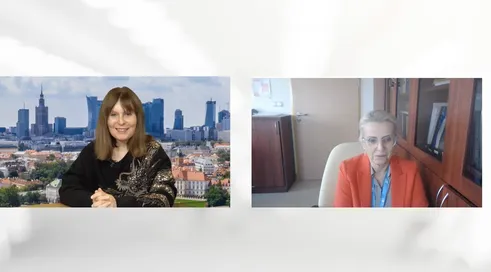
A decade ago, a program providing free medications to seniors was launched. Since then, the number of available medications has more than tripled, and the program has covered millions of patients. Prof. Ewa Marcinowska-Suchowierska, a specialist in internal medicine and geriatrics, discusses the importance of List S, its impact on seniors’ health, and concerns regarding potential changes in access to treatment.
“At the pharmacy counter, they had to choose which medication to buy.” Ten years of the list of free medications for seniors

Published June 16, 2026 12:20

Fot. MedExpress TV
It has been 10 years since the launch of the free medication program for seniors. Looking back, how would you assess its significance?
The introduction of a free medication program for seniors was a response to a fundamental systemic problem—the financial barrier to accessing treatment. Many elderly patients either stopped purchasing medications or limited their treatment due to costs, which directly affected the effectiveness of their care. The program’s goal was therefore not only to ease the burden on household budgets but also to improve adherence to treatment recommendations and health outcomes.
It is worth noting that for many years, the level of copayments for medications in Poland was among the highest in Europe. The program has significantly reduced this problem among seniors.
Professor, you mentioned a financial barrier. Older patients often have multiple health conditions at the same time. How does this affect the effectiveness of treatment?
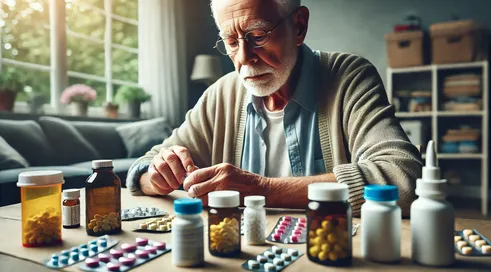
Seniors often have to deal with multiple health conditions, which means they have to take many medications. Before the program was introduced, they frequently had to make difficult choices at the pharmacy counter about which medication to buy and which to skip. Thanks to the List of Free Medications for Seniors, access to treatment—including modern therapies—is becoming more predictable and less dependent on patients’ financial means. This is a real qualitative change: innovative treatment is no longer the exception, but is increasingly becoming a part of daily care for patients with chronic conditions.
How has the program itself changed over the past 10 years?
Over the past 10 years, List S has undergone a significant evolution. The number of medications available to seniors has increased several times over (more than threefold), and the program itself has been expanded from basic therapies to cover a wide range of chronic diseases. Today, it covers, among other things, the treatment of cardiovascular diseases, diabetes, osteoporosis, neurological diseases (including Parkinson’s disease), and respiratory diseases. Innovative treatments, particularly for chronic diseases, are increasingly becoming the standard of care available to patients, rather than a limited option for the few.
Is the development of the program particularly important in the context of demographic changes?
Yes, and it will only get bigger. Poland has one of the fastest-aging populations in Europe. Already, people aged 65 and older make up about 20 percent of the population, and their share will continue to rise steadily in the coming decades.
This means a greater need for the treatment of chronic diseases, an increasing burden on the healthcare system, and the need to ensure that patients have stable and predictable access to treatment.
In recent weeks, there have been reports of possible changes to the program. What concerns do these changes raise?
According to correspondence (published by Janusz Cieszyński) between the Ministry of Health and the Agency for Health Technology Assessment and Tariff System, restrictions on access to certain medications are being planned. Both doctors and patients fear that access to innovative drugs will be reduced in favor of generic drugs. Doctors point out that for seniors, changing a treatment they are accustomed to and respond well to (which is extremely important in cases of multimorbidity) may lead to a decline in adherence. It is therefore reasonable to leave the choice of therapy to the doctor, especially if the price of the brand-name drug is similar to that of the generic.
What lessons should we learn from the List S’s 10 years of operation?
Programs such as Lista S are a sign of a mature state—one that understands that a modern society cares for both its youngest and oldest citizens.